

Methought - October/2025
Monthly wrap-up: reread Frankenstein, discovered the melancholy of Beowulf, read a great article about war and the media, watched three very disturbing horror movies (and Ken Russell is not included).

Scroll down to read the English version
Caros Leitores,
Eu adoro outubro porque sempre faço uma seleção temática de filmes e livros que têm a ver com Halloween. Mesmo que não seja celebrado aqui no Brasil, eu me divirto muito fazendo essa curadoria.
Esse foi um mês muito atribulado pois, dentre outras coisas, participei de dois festivais culturais nos quais fui palestrar sobre literatura, crítica, e internet. Voltei a ler no meu ritmo normal e isso me motivou a escrever; não vi tantos filmes de Halloween quanto eu gostaria; já estou ansiosa pensando nos projetos de leitura (e para essa newsletter) do ano que vem.
Lógico que o poema do mês tinha que ser temático também:
The Valley of Unrest By Edgar Allan Poe
Once it smiled a silent dell
Where the people did not dwell;
They had gone unto the wars,
Trusting to the mild-eyed stars,
Nightly, from their azure towers,
To keep watch above the flowers,
In the midst of which all day
The red sun-light lazily lay.
Now each visitor shall confess
The sad valley’s restlessness.
Nothing there is motionless—
Nothing save the airs that brood
Over the magic solitude.
Ah, by no wind are stirred those trees
That palpitate like the chill seas
Around the misty Hebrides!
Ah, by no wind those clouds are driven
That rustle through the unquiet Heaven
Uneasily, from morn till even,
Over the violets there that lie
In myriad types of the human eye—
Over the lilies there that wave
And weep above a nameless grave!
They wave:—from out their fragrant tops
External dews come down in drops.
They weep:—from off their delicate stems
Perennial tears descend in gems.
LIVROS &TC.
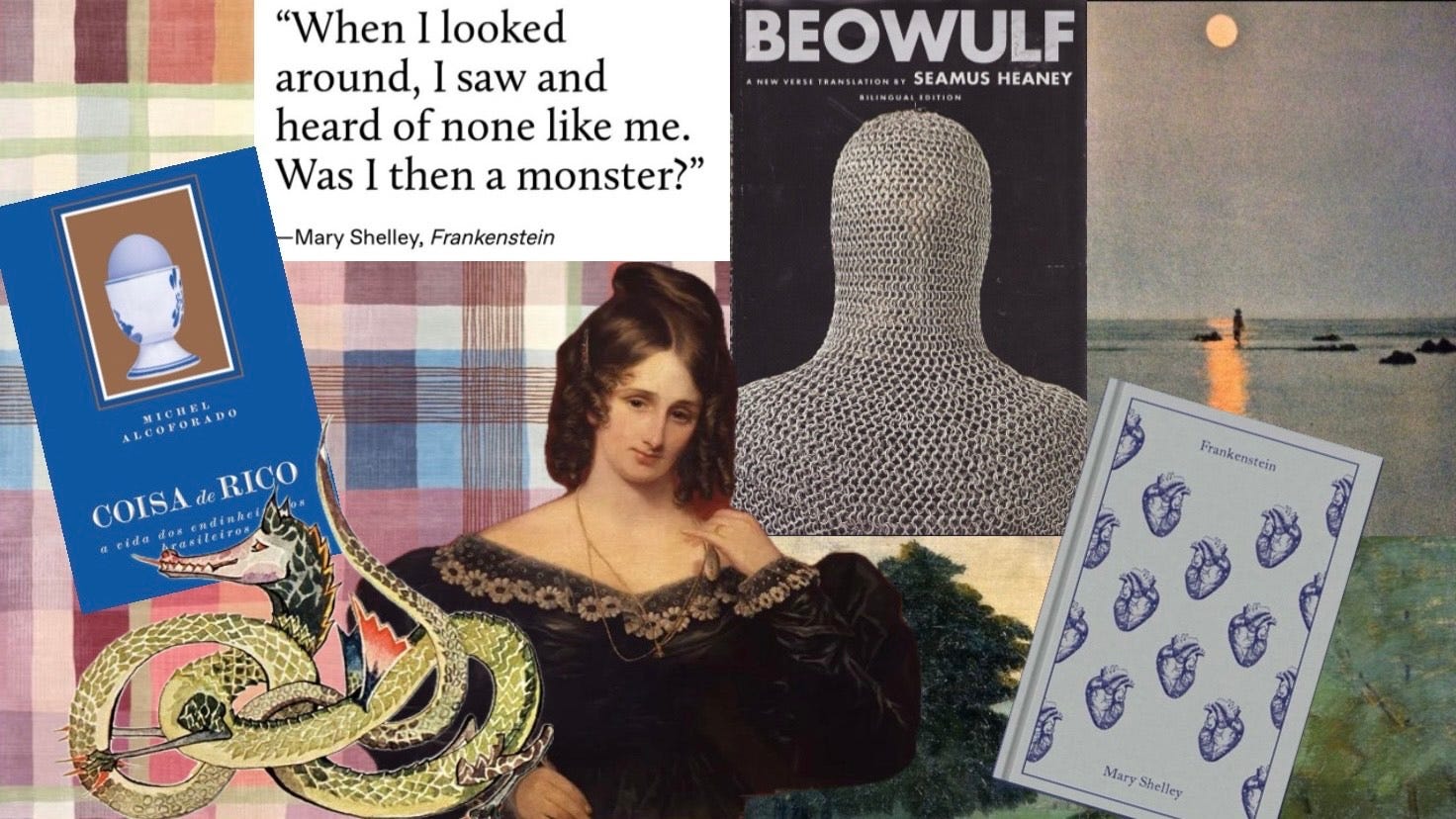
Frankenstein - Mary Shelley (1831)
Lembro de ler Frankenstein pela primeira vez em 2021 e ser surpreendida por um romance muito mais triste, melancólico, sensível e existencialista do que eu esperava. Há tempos que eu queria reler, e fico feliz em constatar que ele é sim tão bom quanto eu lembrava, na verdade, para mim é quase um livro perfeito. Nada desse livro existe em vão, e é sempre muito satisfatório perceber isso durante a leitura. Tal como Paradise Lost, o poema que guia muito dessa narrativa, cada elemento, frase, ou palavra posta em Frankenstein é visivelmente intencional e bem pensada, produzindo um nível de coerência interna impressionante, e que fornece produto infinito para análises.
Mais do que uma crítica à busca do conhecimento feita com ganância, Shelley mostra o que acontece quando o ímpeto pelo progresso científico corre solto sem os freios da responsabilidade e da sensibilidade. Logicamente, essa crítica é pertinente até hoje — talvez ainda mais pertinente nessa era das trevas, assombrada por bilionários, fascismo e inteligência artificial. Acho que na releitura eu senti ainda mais pena do monstro e mais raiva de Victor; por algum motivo, eu consegui sentir com mais clareza a solidão absolutamente hostil à qual o monstro foi condenado sendo totalmente inocente. O horror do romance para mim é esse, pois esse tipo de solidão é meu pior pesadelo.
Coisa de Rico - Michel Alcoforado (2025)
Às vezes somos vítimas do hype e tá tudo bem. Se você é brasileiro, gosta de ler e tem acesso à internet, você provavelmente viu algum vídeo sobre esse livro (seja de um leitor ou do próprio autor). A sinopse que promete uma visão analítica (mas com humor!) dos códigos comportamentais que ditam a vida dos ricos é até verdade, mas o livro não é tão esclarecedor quanto muitos fizeram parecer. A escrita me incomodou pelas repetições e superficialidade, e pelo toque de humor “mean girl” que achei de mau gosto — mas até aí tudo bem, porque ele não é escritor de fato, e sim antropólogo.
Sim, é um livro interessante, mas mais por fornecer anedotas curiosas de ricos esquisitos que claramente não sabem viver bem (ou pelo menos não de acordo com a descrição do autor) do que por oferecer uma elucidação sobre a condição psíquica-social-cultural de pessoas que vivem numa extrema disparidade econômica em um país ultra desigual — isso sim era o que me interessava e o que me fez ler o livro equivocadamente. Ou seja, este não é um livro “necessário” como muitos resenhistas gostam de dizer, mas é divertido. A “tese” de Michel é entendida logo no início (qual seja, sobe a “operação da diferença” entre ricos e não-ricos) e repetida com frequência cansativa. Em resumo: não acho que aprendi nada novo, a não ser umas boas fofocas.
Beowulf - Desconhecido/Trad. Seamus Heaney (c. sec. VIII)
Uma ótima surpresa nas leituras desse ano, não esperava que fosse gostar tanto de Beowulf. Muito mais fácil de ler do que eu esperava e muito mais divertido. Primeiro, para quem é fã de Senhor dos Anéis como eu, esse livro é um prato cheio, pois boa parte da saga de Tolkien foi inspirada por esse texto (temos um dragão semelhante a Smaug, uma narrativa quase igual a de Thorin Oakenshield, tribos parecidas com os cavaleiros de Rohan, inclusive um homem chamado Eomer).
Beowulf pode ser lido de diversas formas e essa plasticidade textual é meu aspecto favorito: pode ser uma proto-fantasia, uma espécie de romance histórico, uma elegia heroica (como Tolkien argumenta), um poema épico no estilo de Homero e Virgílio, um código de conduta como o “mirror for magistrates” medieval, etc. Escrevi sobre isso nesse texto:
"All Glory Ends In Night": the doomed resistance of Beowulf

‘I’m aware that I and the people I love may perish in the morning. I know that. But there’s light in our faces now’ — James Baldwin, Meeting the Man: James Baldwin in Paris (Terrence Dixon, 1970)Methinks is a free literary newsletter. If you enjoy my work and would like to support it, you can subscribe for …
Mas em resumo, essa longa narrativa em verso, escrita originalmente em Old English, conta a história de guerreiros anglo-saxões na atual Dinamarca. Beowulf é um guerreiro ideal, que sem hesitar enfrenta três grandes desafios monstruosos. Em sua essência, a narrativa explora as virtudes da coragem e da sabedoria, e como elas formam um bom guerreiro e um bom rei. Pode ser lida como uma história de aventura, mas para mim o que ficou foi o lamento pela cultura pagã perdida e a transcendência da memória de um povo através da linguagem.
ARTIGOS, ENSAIOS, PALESTRAS
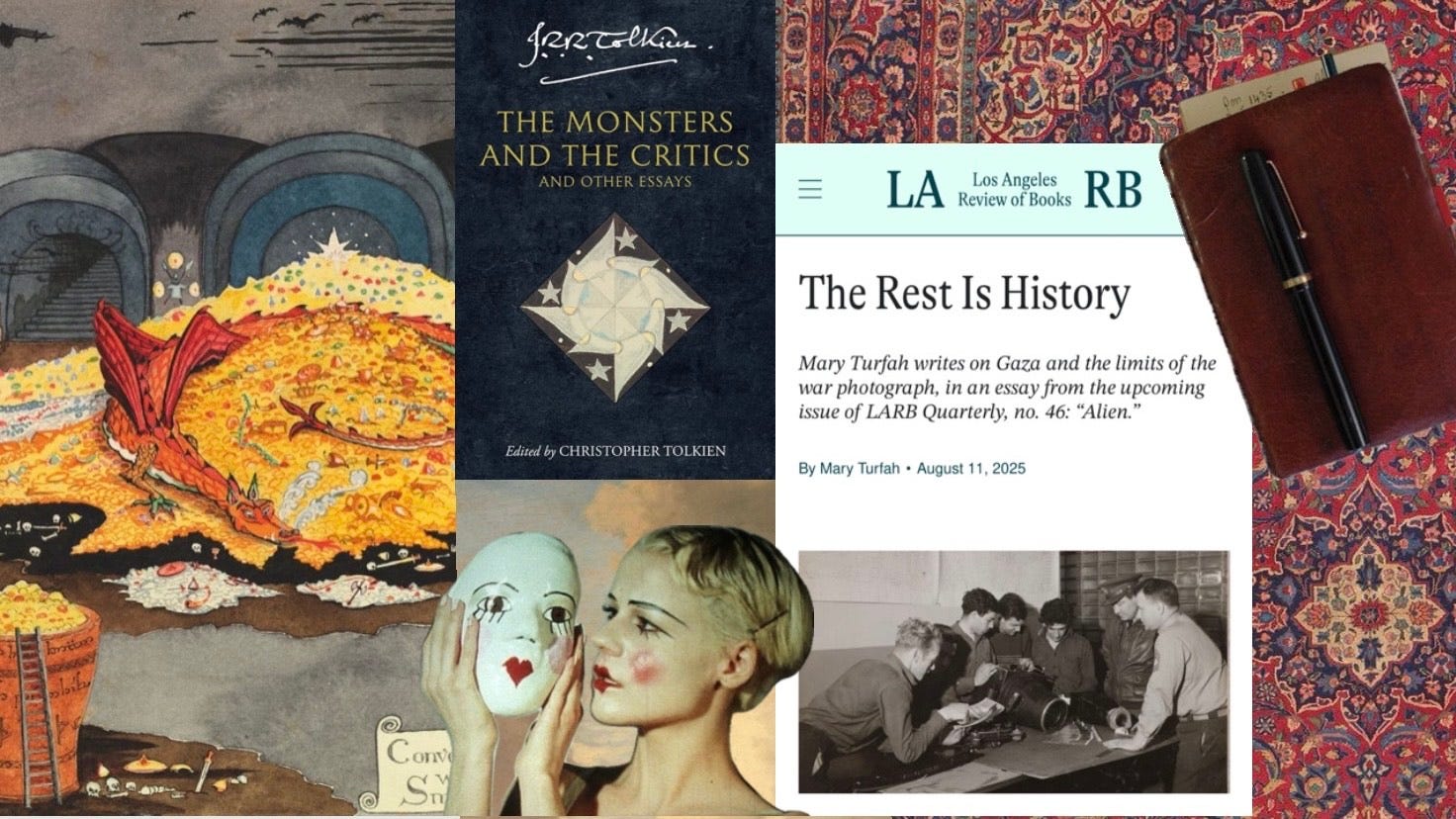
The Monsters and the Critics - J.R.R. Tolkien (1936)
Um dos melhores ensaios críticos que já li, The Monsters and the Critics, propõe uma releitura do épico Beowulf focando em seus aspectos poéticos e em suas criaturas monstruosas, Grendel e o Dragão. Segundo Tolkien, a tradição crítica de Beowulf, até aquele momento, se restringiu a interpretações equivocadas que davam ao texto um valor meramente histórico e documental, ao invés de apreciá-lo pelo que ele é: um poema, especificamente uma elegia heroica. Além disso, Tolkien destaca a importância simbólica dos monstros no poema como um marcador da transição do imaginário pagão para o cristão, bem como revela a essência melancólica e nostálgica presente no texto, relacionada ao luto por uma cultura perdida.
The Rest Is History - Mary Turfah (2025)
Some readers will find this ungenerous, and I ask them to consider that anti-racism (and much of anti-war discourse) is functionally a self-help industry. The model is reform, from the inside. When it doesn’t work, you appeal harder: the way to end all the harm in the world is to convince the people doing the harm to see you. And once they see you, they will hear you. This is especially convenient in that it assumes the people implicated in the harm simply don’t know what they’re doing. That they don’t recognize your humanity reflects not moral decay but honest oversight. The road out of hell starts with a photograph; with every country it destroys, the United States gets closer to never doing it again. It’s the story Americans want, a hope they can believe in.
Turfah critica certas abordagens jornalísticas (principalmente de veículos como o New York Times) que despessoalizam e generalizam as consequências da guerra, registradas em suas fotos e reportagens. Vemos imagens de crianças mutiladas em Gaza, mas os autores do crime não são nomeados; o causador desse mal é a “guerra” em abstrato; o fato de inocentes sofrerem incessantemente é descrito como um “erro” ou “equívoco”, como se os envolvidos não soubessem o que estão fazendo. A autora argumenta que a circulação de imagens trágicas, tanto na mídia tradicional como em reposts nos stories do Instagram, não traz nada além de um espetáculo que até gera certa comoção, mas de uma forma autocentrada. Como o trecho acima explica, para muitas pessoas o ativismo hoje em dia virou mais um aspecto do autoaprimoramento — não é sobre justiça social, ética ou moralidade; é sobre ser “a sua melhor versão”. Claro que existem controvérsias e exceções, mas ainda assim, acho que concordo com a perspectiva de que “the revolution will not be televised, it will be commodified”.
The Sexual Politics of Frankenstein - Atun-Shei Films YouTube channel
Não concordo com todas as interpretações feitas com relação à amplitude do subtexto erótico na narrativa de Mary Shelley. Ainda assim, gostei muito desse vídeo, principalmente quando ele traça paralelos entre a vida pessoal da autora e sua obra.
FILMES & SÉRIES
The Devils - Ken Russell (1971)
Não sei por onde começar. Bizarro, depravado, ofensivo, sim — mas incrível também. As atuações são o ponto alto dessa história surreal, apesar de ser anunciada como baseada em fatos. Situado numa cidadezinha francesa assolada pela praga no séc. XVII, um padre de conduta duvidosa é acusado de molestar as freiras de um convento e de ter um pacto com o diabo. The Devils exibe uma das melhores e mais sinistras representações de obsessão, luxúria e decadência que já vi num filme. Russell choca a audiência do começo ao fim, mas não é apenas “chocar por chocar” — existe propósito e zelo em cada escolha maluca feita.
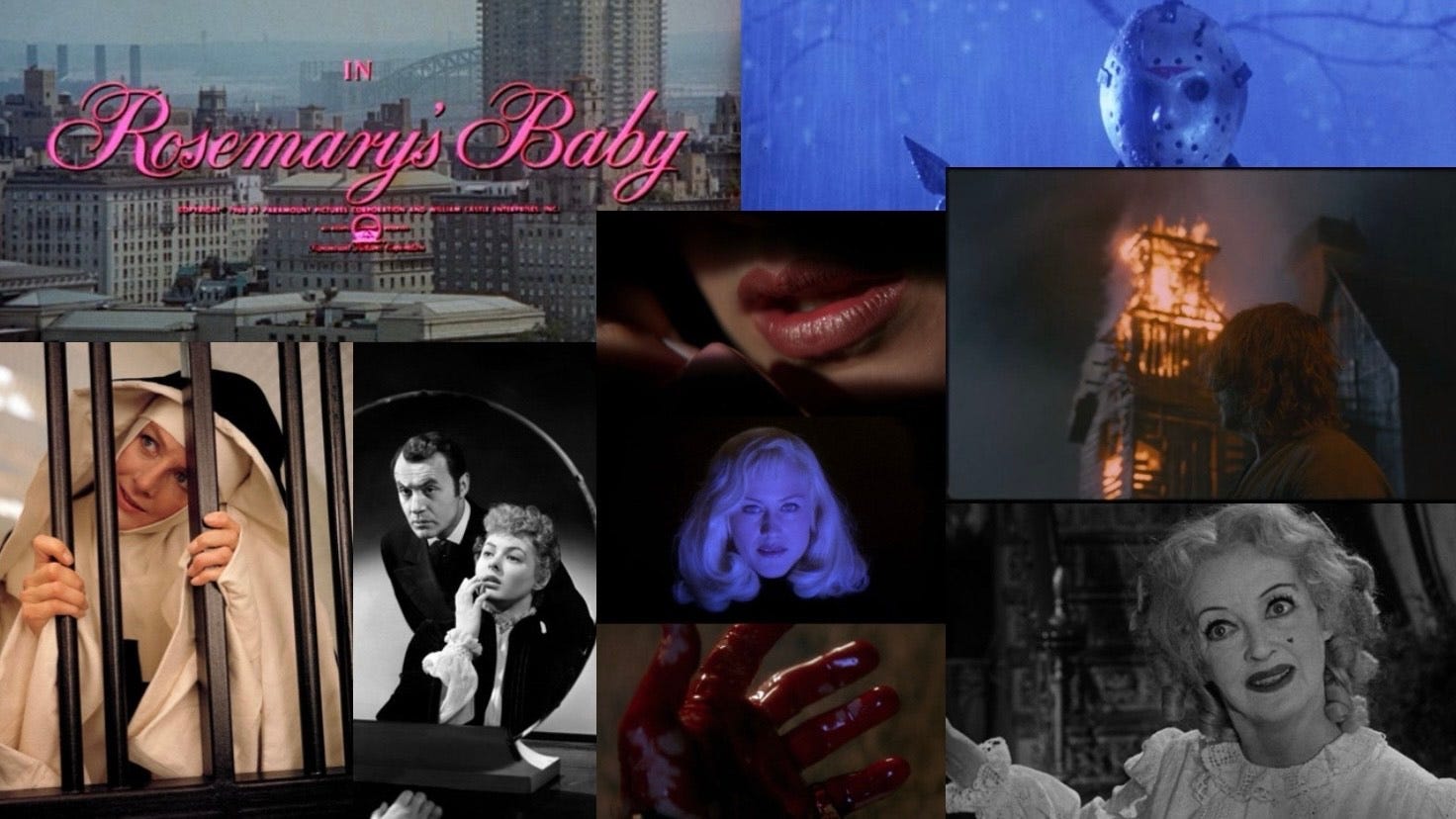
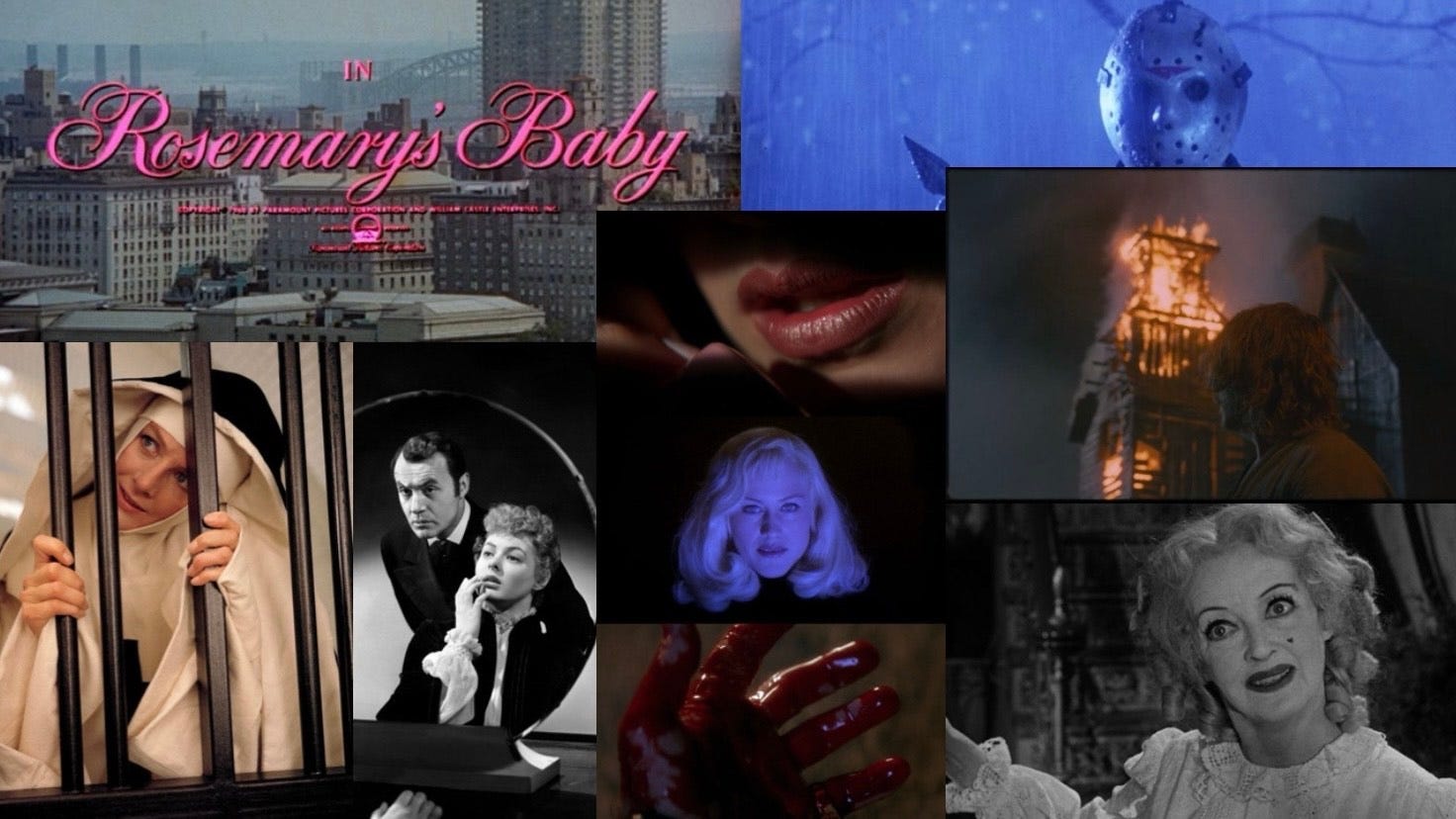
O Bebê de Rosemary - Roman Polanski (1968)
O filme mais aterrorizante para quem tem dúvidas sobre maternidade. Foi uma agonia assistir, mas num bom sentido. O espectador se sente no lugar da pobre Rosemary, sufocada por pessoas que querem usá-la e enganá-la enquanto a tratam como uma criança tola (esse é um dos piores-melhores exemplos de gaslight que já tive o desprazer de testemunhar). Conclusão: é muito frustrante ser mulher. Mas só mais uma observação: figurinos impecáveis, queria todo o guarda-roupa de Rosemary.
Sexta-Feira 13 - Sean S. Cunningham (1980)
Não adianta, eu odeio filme de slasher. Não vejo graça, não tem história. A única coisa interessante desse filme é seu papel como “inventor” de um gênero (ou no mínimo de um tipo de filme). Mas sinceramente, estou cansada de ver um grupo de adolescentes/jovens estúpidos sendo gradualmente assassinados. Tédio.
Harvest - Athina Rachel Tsangari (2025)
Uma grande decepção. Esperava um folk-horror moderno inspirado em The Wicker Man e encontrei um filme murcho que hesita nos momentos errados e termina sem ter nada a dizer. A trama se passa numa vila camponesa isolada, e a partir da chegada de um novo senhor (que simboliza a chegada parasítica e pouco sutil da modernidade industrial), os camponeses precisarão enfrentar situações moralmente duvidosas se quiserem preservar seu estilo de vida. Em tese isso tinha tudo para funcionar — até porque o filme é visualmente lindo e colorido — mas a execução falhou terrivelmente. Arrastado, entediante, indeciso.
Lisa Frankenstein - Zelda Williams (2024)
Um gótico-kitsch que é bem-sucedido em sua proposta de entreter adolescentes e jovens millennials que usaram o Tumblr. Lisa não é como as outras garotas — definitivamente não é como a sua irmã líder de torcida — e em sua esquisitice macabra de adolescente, acaba desenvolvendo uma obsessão por um jovem morto há mais de 100 anos, cujo busto reside no cemitério onde ela passeia com frequência. Você pode imaginar que em algum momento esse rapaz vai voltar dos mortos. O filme tem uma virada sombria um tanto inesperada, mas que me agradou. Esse é um exemplo de quando os clichês funcionam.
The Mastermind - Kelly Reichardt (2025)
Não sei o que eu esperava desse filme, mas com certeza era mais. O título extremamente irônico poderia funcionar melhor se o protagonista fosse mais interessante em sua completa inaptidão em fazer qualquer empreitada dar certo. A trama se resume a uma sucessão de “planos infalíveis” fadados ao fracasso para roubar um museu, permeado por um drama familiar insosso. As motivações não ficam claras, e a inacessibilidade ao interior do protagonista — apesar de eu supor que seja proposital — fez com que eu não me importasse com nada que estava assistindo. A culpa não é de Josh O’Connor, que é um ótimo ator e está muito bem, mas achei o filme em si apático. Não tenho nada contra filmes lentos, mas dessa vez foi difícil ficar acordada no cinema.
Gaslight - George Cukor (1944)
Absolutamente brilhante e terrível na agonia que causa ao espectador. Para quem não sabe, o famoso termo “gaslight” vem desse filme. Foi uma experiência semelhante a assistir O Bebê de Rosemary, pois aqui temos uma esposa carismática e inocente sendo manipulada por um marido crápula que quer levá-la a loucura para conseguir alguma vantagem.
Whatever Happened to Baby Jane? -
Que filme traumático. Desconfortável, uncanny, mórbido e azedo. Muito mais brutal do que eu esperava, principalmente graças às performances incomparáveis de Joan Crawford e Betty Davies — Davies está particularmente medonha. Me impressionou a falta de vaidade dela para aceitar um papel desses e realizá-lo daquele jeito. Na época ela só tinha 54 anos e parecia ser pelo menos dez anos mais velha com a caracterização e trejeitos escolhidos. O filme se resume a duas irmãs que vivem praticamente confinadas em casa após a decadência de suas carreiras no cinema. Ambas estão presas no passado de formas diferentes, e conforme a trama se desenvolve, os horrores dessa prisão psicológica vão se intensificando até atingir extremos de violência, culminando na revelação de um segredo quando já é tarde demais. Certas cenas eu não consegui assistir de tanto que me incomodaram. É brilhante e horrível e eu nunca mais vou rever.
Lost Highway - David Lynch (1997)
Será que algum dia eu vou assistir a um filme de Lynch e entender alguma coisa de primeira? Mesmo que isso me irrite eu não posso desistir de alguém que criou a obra-prima pós-moderna Twin Peaks. Não sei nem dizer se gostei desse filme, mas pelo menos consegui identificar os temas clássicos de Lynch, como alienação e corrupção da inocência, além da estrutura de “duplos” e da confusão intencional entre realidade, sonho e memória. A narrativa acompanha dois homens, um músico e um mecânico, e após um ato terrível de violência, um deles se transforma no outro (aparentemente, eu não saberia dizer com certeza). Existe uma figura vampírica pairando ao redor, que me fez teorizar sobre a existência de algum pacto fáustico. É um filme bastante lento, e que com certeza eu teria apreciado mais tendo o visto no cinema.
What We Do In The Shadows - Taika Waititi, Jemaine Clement (2014)
Depois de tantos filmes que me deixaram agoniada e desconfortável, optei por assistir algo divertido no dia 31. Eu tinha certeza que ia gostar de What We Do In The Shadows, tanto pela ótima premissa de vampiros antiquados tentando existir no século XXI quanto por já conhecer e adorar o trabalho humorístico de Waititi (eu amo a série Our Flag Means Death).
MÚSICA & PODCASTS
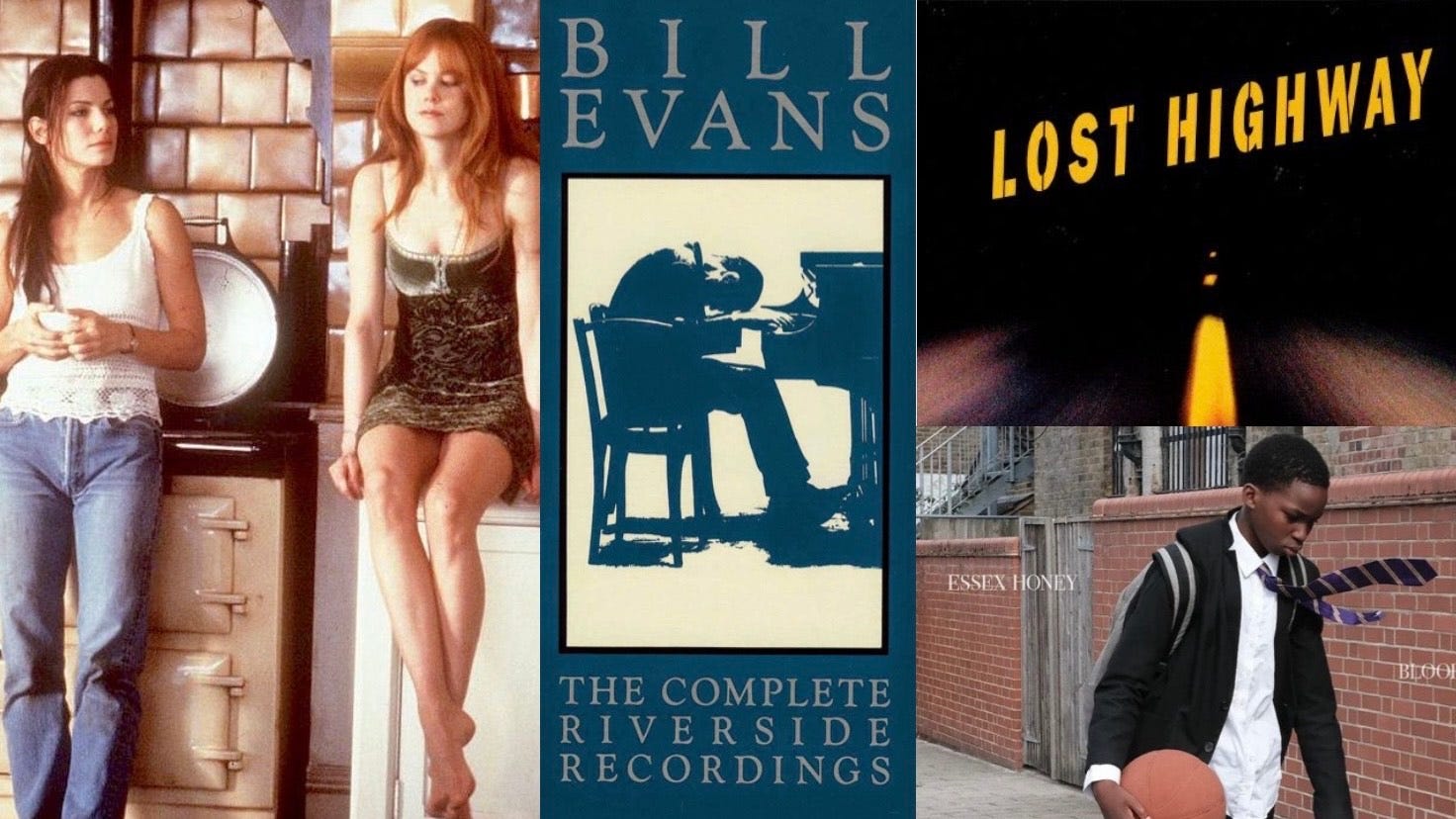
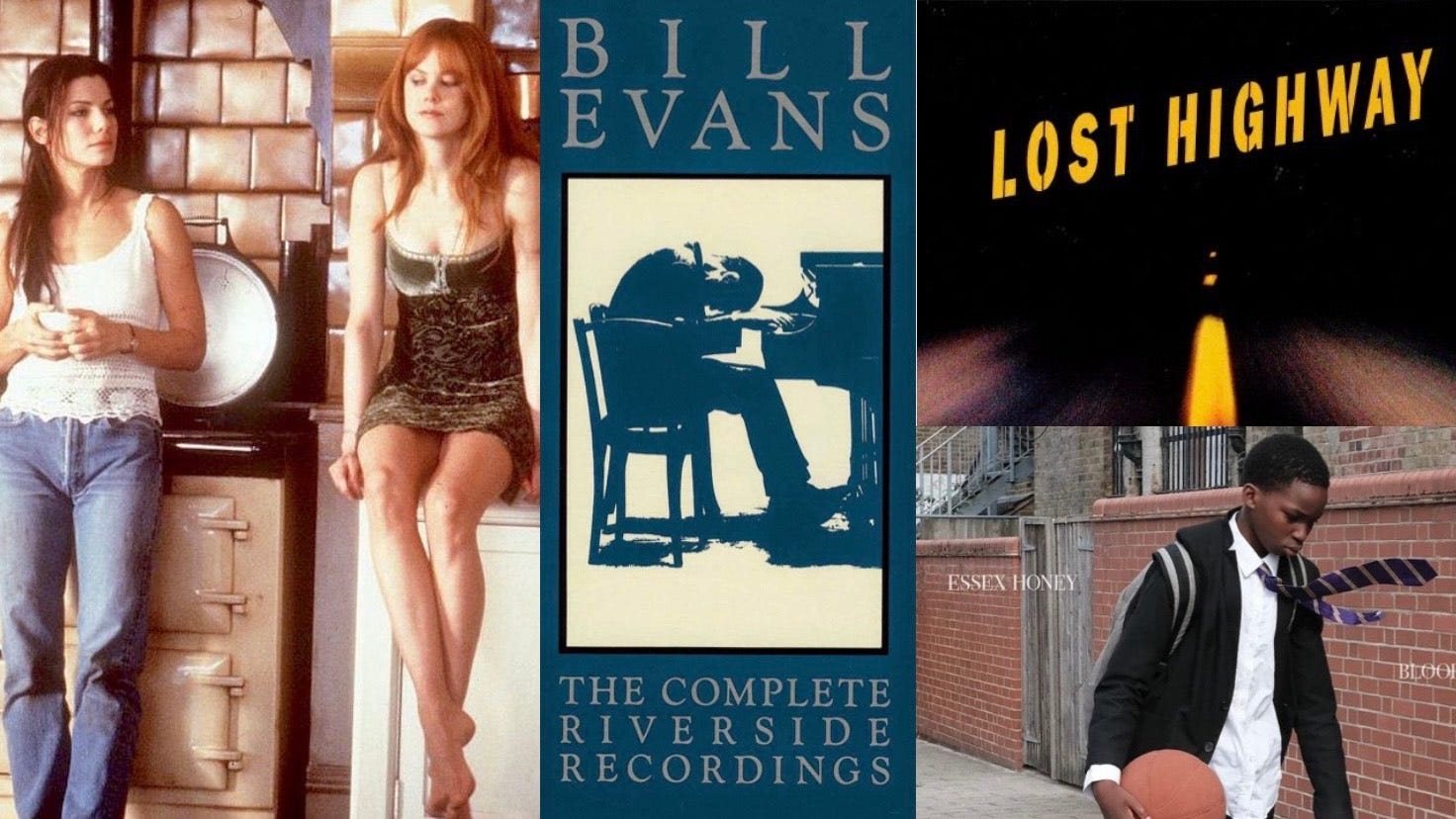
Essex Honey - Blood Orange (2025)
Dev Hynes!!!!! Brilhante como de costume, esse novo àlbum tem uma certa nostalgia e melancolia, ainda que envolto em melodias animdas; são arranjos interessantes que misturam pianos, violinos e violoncelos com beats eletrônicas, o tipo de coisa que eu geralmente aprecio. Imagino esse álbum tocando numa festa de muito bom gosto, onde as pessoas estejam entretidas demais para prestar atenção nas letras tristes.
Lost Highway Soundtrack (1997)
Não gostei tanto do filme mas a trilha sonora é impecável. Além do trabalho de Angelo Badalamenti que é sempre incrível, o filme conta com músicas de Bowie, The Smashing Pumpkins, Lou Reed, etc. Vale o destaque para o cover de Song to the Siren (uma das minhas músicas favoritas) feito por This Mortal Coil, que por algum motivo não está listado no álbum mas vale pesquisar
You Must Believe in Spring - Bill Evans (1981)
Bill Evans é um dos meus jazzistas favoritos, e eu gosto de ouvir esse disco quando estou lendo ou escrevendo e preciso bloquear os barulhos internos que interferem na minha concentração. São melodias muito suaves e elegantes e que normalmente me relaxam.
Witchy Woman Playlist
Practical Magic é um dos meus filmes favoritos e eu revejo com frequência meio obsessiva, principalmente em outubro. Portanto, tenha certeza que passei o mês inteiro ouvindo essa playlist no banho, enquanto arrumo a casa ou cozinho. Minhas favoritas aqui são Crystal de Stevie Nicks e Babooshka de Kate Bush.
Dear Readers,
I love October because I always make a themed selection of films and books related to Halloween. Even though it is not celebrated here in Brazil, I have a lot of fun curating this selection.
This was a very busy month because, among other things, I participated in two cultural festivals where I gave talks on literature, criticism, and the internet. I went back to reading at my normal pace, which motivated me to write; I didn’t see as many Halloween films as I would have liked; I’m already excited about next year’s reading projects (and for this newsletter).
Of course, the poem of the month had to be themed as well:
The Valley of Unrest By Edgar Allan Poe
Once it smiled a silent dell
Where the people did not dwell;
They had gone unto the wars,
Trusting to the mild-eyed stars,
Nightly, from their azure towers,
To keep watch above the flowers,
In the midst of which all day
The red sun-light lazily lay.
Now each visitor shall confess
The sad valley’s restlessness.
Nothing there is motionless—
Nothing save the airs that brood
Over the magic solitude.
Ah, by no wind are stirred those trees
That palpitate like the chill seas
Around the misty Hebrides!
Ah, by no wind those clouds are driven
That rustle through the unquiet Heaven
Uneasily, from morn till even,
Over the violets there that lie
In myriad types of the human eye—
Over the lilies there that wave
And weep above a nameless grave!
They wave:—from out their fragrant tops
External dews come down in drops.
They weep:—from off their delicate stems
Perennial tears descend in gems.
BOOKS &TC.
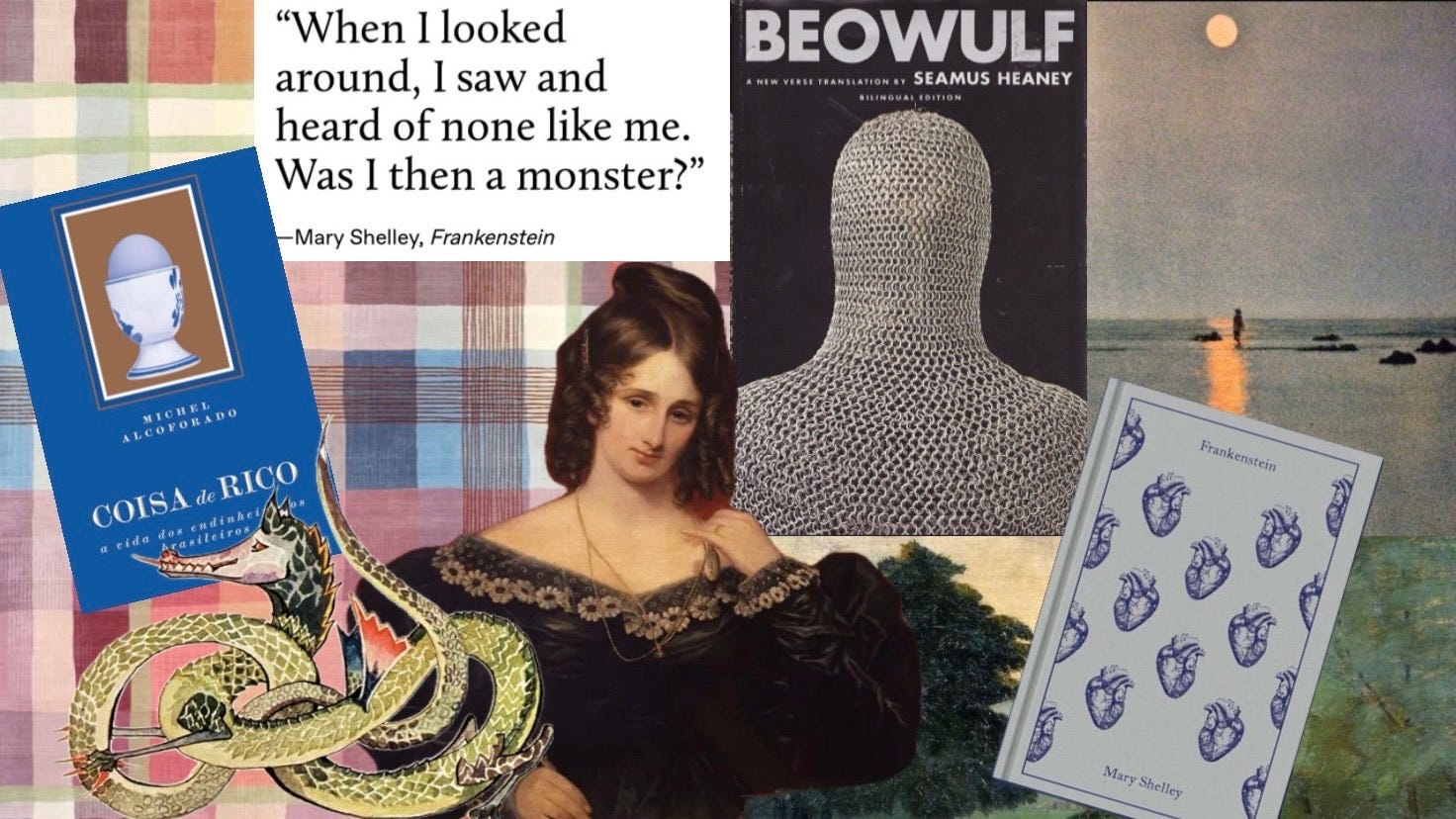
Frankenstein - Mary Shelley (1831)
I remember reading Frankenstein for the first time in 2021 and being surprised by a novel that was much sadder, more melancholic, sensitive, and existentialist than I expected. I had wanted to reread it for a long time, and I am happy to say that it is indeed as good as I remembered; in fact, for me, it is almost a perfect book. Nothing in this book exists in vain, and it is always very satisfying to realise this while reading. Like Paradise Lost, the poem that guides much of this narrative, every element, sentence, or word in Frankenstein is visibly intentional and well thought out, producing an impressive level of internal coherence and providing endless material for analysis.
More than a critique of the greedy pursuit of knowledge, Shelley shows what happens when the drive for scientific progress runs wild without the brakes of responsibility and sensitivity. Naturally, this critique is still relevant today — perhaps even more relevant in this new dark age, haunted by billionaires, fascism, and artificial intelligence. I think that on rereading it, I felt even more pity for the monster and more anger towards Victor; for some reason, I was able to feel more clearly the absolutely hostile loneliness to which the monster was condemned, despite being totally innocent. For me, that is the horror of the novel, because that kind of loneliness is my worst nightmare.
Coisa de Rico (Rich People’s Stuff) - Michel Alcoforado (2025)
Sometimes we fall victim to hype, and that’s okay. If you are Brazilian, enjoy reading, and have access to the internet, you have probably seen a video about this book (either by a reader or the author himself). The synopsis promises an analytical (yet humorous!) view of the behavioural codes that dictate the lives of the rich, and this is true, but the book is not as enlightening as many have made it seem. The writing bothered me because of its repetitions and shallowness, and because of the touch of ‘mean girl’ humour that I found distasteful — but that’s okay, because he’s not really a writer, but an anthropologist.
Yes, it’s an interesting book, but more for providing curious anecdotes about weird rich people who clearly don’t know how to live well (or at least not according to the author’s description) than for offering an elucidation of the psychosocial-cultural condition of people living in extreme economic disparity in an highly unequal country — that was what interested me and what made me read the book with the wrong expectations. In other words, this is not a ‘necessary’ book, as many reviewers like to say, but it is entertaining. Michel’s “thesis” is understood right from the start (namely, the ‘operation of difference’ between the rich and the non-rich) and repeated with tiresome frequency. In short: I don’t think I learned anything new, except for some good gossip.
Beowulf - Unknwon/Translated by Seamus Heaney (c. 8th cent.)
A great surprise among this year’s readings, I didn’t expect to enjoy Beowulf so much. Much easier to read than I expected and much more entertaining. First, for fans of Lord of the Rings like me, this book is a treat, as much of Tolkien’s saga was inspired by this text (we have a dragon similar to Smaug, a narrative almost identical to that of Thorin Oakenshield, tribes similar to the knights of Rohan, including a man named Eomer).
Beowulf can be read in many ways, and this textual plasticity is my favourite aspect: it can be a proto-fantasy, a kind of historical novel, a heroic elegy (as Tolkien argues), an epic poem in the style of Homer and Virgil, a code of conduct like the medieval ‘mirror for magistrates’, etc. I wrote about it at lenght here:
"All Glory Ends In Night": the doomed resistance of Beowulf
‘I’m aware that I and the people I love may perish in the morning. I know that. But there’s light in our faces now’ — James Baldwin, Meeting the Man: James Baldwin in Paris (Terrence Dixon, 1970)Methinks is a free literary newsletter. If you enjoy my work and would like to support it, you can subscribe for …
But in short, this long narrative in verse, originally written in Old English, tells the story of Anglo-Saxon warriors in present-day Denmark. Beowulf is an ideal warrior who unhesitatingly faces three great monstrous challenges. At its core, the narrative explores the virtues of courage and wisdom, and how they shape a good warrior and a good king. It can be read as an adventure story, but for me what remained was the lament for lost pagan culture and the transcendence of a people’s memory through language.
ARTICLES, ESSAYS, LECTURES
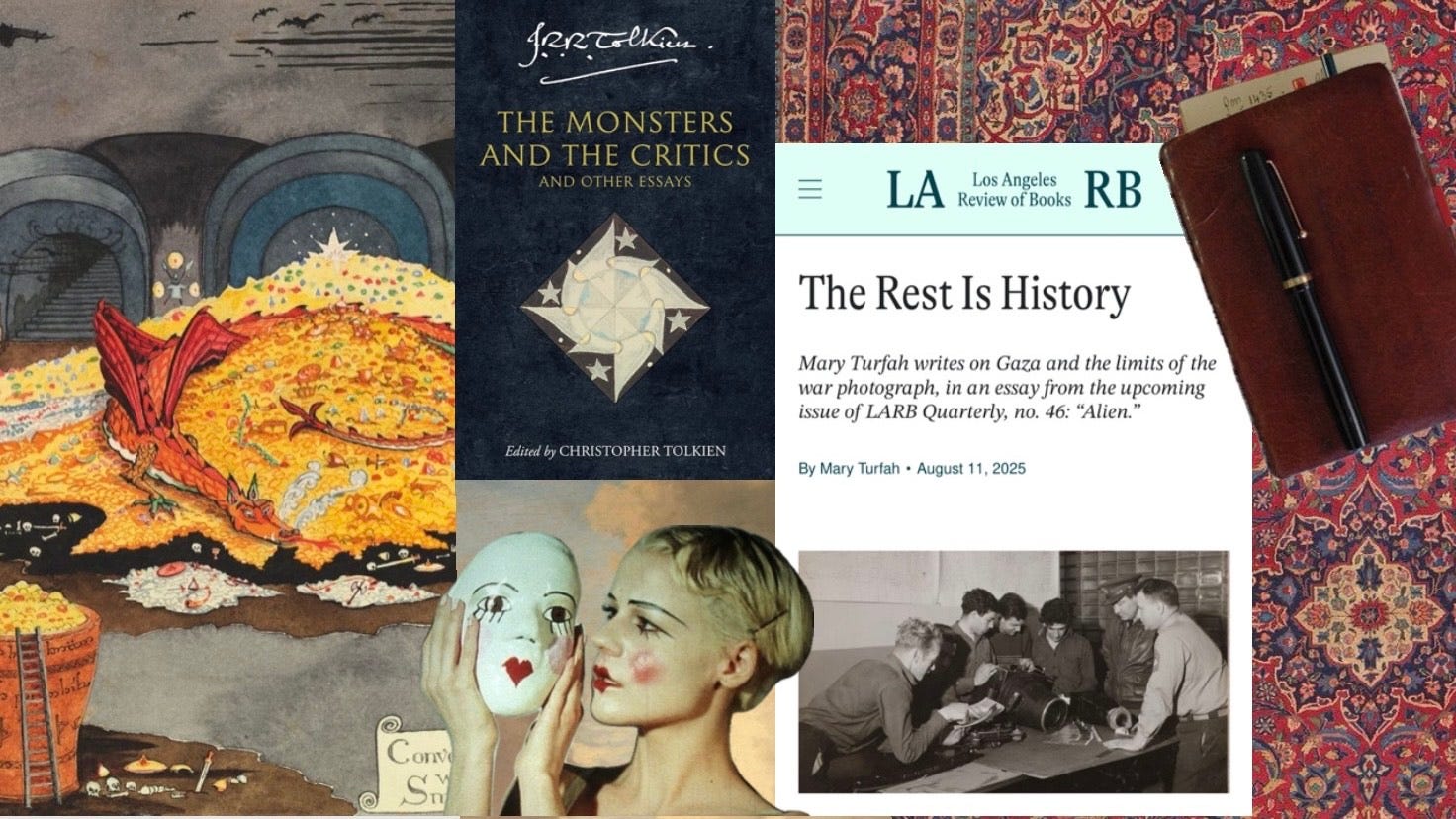
The Monsters and the Critics - J.R.R. Tolkien (1936)
One of the best critical essays I have ever read, The Monsters and the Critics, proposes a reinterpretation of the epic Beowulf, focusing on its poetic aspects and its monstrous creatures, Grendel and the Dragon. According to Tolkien, the critical tradition of Beowulf, up to that point, had been restricted to misguided interpretations that gave the text a purely historical and documentary value, rather than appreciating it for what it is: a poem, specifically a heroic elegy. In addition, Tolkien highlights the symbolic importance of monsters in the poem as a marker of the transition from pagan to Christian imagery, as well as revealing the melancholic and nostalgic essence present in the text, related to mourning for a lost culture.
The Rest Is History - Mary Turfah (2025)
Some readers will find this ungenerous, and I ask them to consider that anti-racism (and much of anti-war discourse) is functionally a self-help industry. The model is reform, from the inside. When it doesn’t work, you appeal harder: the way to end all the harm in the world is to convince the people doing the harm to see you. And once they see you, they will hear you. This is especially convenient in that it assumes the people implicated in the harm simply don’t know what they’re doing. That they don’t recognize your humanity reflects not moral decay but honest oversight. The road out of hell starts with a photograph; with every country it destroys, the United States gets closer to never doing it again. It’s the story Americans want, a hope they can believe in.
Turfah criticises certain journalistic approaches (mainly from outlets such as the New York Times) that depersonalise and generalise the consequences of war, as recorded in their photos and reports. We see images of mutilated children in Gaza, but the perpetrators of the crime are not named; the cause of this evil is ‘war’ in the abstract; the fact that innocent people suffer incessantly is described as a ’mistake’ or ‘misunderstanding’, as if those involved did not know what they were doing. The author argues that the circulation of tragic images, both in traditional media and in reposts on Instagram stories, brings nothing more than a spectacle that might generate some commotion, but in a self-centred way. As the excerpt above explains, for many people today, activism has become another aspect of self-improvement — it is not about social justice, ethics, or morality; it is about being ‘the best version of yourself.’ Of course, there are controversies and exceptions, but still, I think I agree with the perspective that ‘the revolution will not be televised, it will be commodified.’
The Sexual Politics of Frankenstein - Atun-Shei Films YouTube channel
I don’t agree with all the interpretations made regarding the extent of the erotic subtext in Mary Shelley’s narrative. Still, I really enjoyed this video, especially when it draws parallels between the author’s personal life and her work.
FILMS & SERIES
The Devils - Ken Russell (1971)
I don’t know where to begin. Bizarre, depraved, offensive, yes — but also incredible. The performances are the highlight of this surreal story, despite being presented as based on true events. Set in a small French town ravaged by the plague in the 17th century, a priest of dubious conduct is accused of molesting the nuns of a convent and of having a pact with the devil. The Devils showcases one of the best and most disturbing portrayals of obsession, lust, and decadence I have ever seen in a film. Russell shocks the audience from beginning to end, but it is not simply “shock for the sake of shock” — there is intention and care in every crazy choice made.
Rosemary’s Baby - Roman Polanski (1968)
The most terrifying film for anyone with doubts about motherhood. Watching it was pure agony, but in a good way. The viewer feels placed in the shoes of poor Rosemary, suffocated by people who want to use and deceive her while treating her like a foolish child (this is one of the worst-best examples of gaslighting I’ve ever had the misfortune to witness). Conclusion: It’s extremely frustrating to be a woman. And one more note: the costumes are impeccable — I’d happily steal Rosemary’s entire wardrobe.
Friday 13th - Sean S. Cunningham (1980)
It’s no use, I hate slasher films. I see no charm in them; there’s no story. The only interesting thing about this film is its role as the “inventor” of a genre (or at least of a certain type of film). But honestly, I’m tired of watching a group of stupid teenagers/young adults being gradually murdered. Boring.
Harvest - Athina Rachel Tsangari (2025)
A big disappointment. I was expecting a modern folk horror inspired by The Wicker Man, but what I found was a lacklustre film that hesitates at the wrong moments and ends up with nothing to say. The plot takes place in an isolated peasant village, and following the arrival of a new lord (who symbolises the parasitic and unsubtle arrival of industrial modernity), the peasants must face morally dubious situations if they want to preserve their way of life. In theory, this had everything it needed to work — not least because the film is visually beautiful and colourful — but the execution failed miserably. Drawn out, boring, indecisive.
Lisa Frankenstein - Zelda Williams (2024)
A gothic-kitsch film that succeeds in its aim to entertain teenagers and young millennials who used Tumblr. Lisa is not like other girls — she is definitely not like her cheerleader sister — and in her macabre teenage weirdness, she ends up developing an obsession with a young man who died over 100 years ago, whose bust resides in the cemetery where she often hangs out. You can imagine that at some point this young man will return from the dead. The film has a somewhat unexpected dark twist, but I liked it. This is an example of when clichés work.
The Mastermind - Kelly Reichardt (2025)
I don’t know what I expected from this film, but it was definitely more. The extremely ironic title could work better if the protagonist were more interesting in his complete inability to make any endeavour succeed. The plot boils down to a sequence of ‘foolproof plans’ doomed to failure to rob a museum, permeated by a bland family drama. The motivations are unclear, and the inaccessibility of the protagonist’s inner life — although I assume this is intentional — made me not care about anything I was watching. It’s not Josh O’Connor’s fault, who is a great actor and did a good job, but I found the film itself apathetic. I have nothing against slow films, but this time it was difficult to stay awake in the cinema.
Gaslight - George Cukor (1944)
Absolutely brilliant and terrifying in the agony it causes the viewer. For those who don’t know, the famous term ‘gaslight’ comes from this film. It was an experience similar to watching Rosemary’s Baby, as here we have a charismatic and innocent wife being manipulated by a scoundrel husband who wants to drive her mad to gain some advantage.
Whatever Happened to Baby Jane? - Robert Aldrich (1962)
What a traumatising film. Uncomfortable, uncanny, morbid and sour. Much more brutal than I expected, mainly thanks to the superb performances of Joan Crawford and Betty Davies — Davies is particularly terrifying. I was impressed by her lack of vanity in accepting such a role and playing it that way. At the time, she was only 54 years old and looked at least ten years older with the characterisation and mannerisms chosen. The film is about two sisters who live practically confined to their home after the decline of their film careers. Both are stuck in the past in different ways, and as the plot develops, the horrors of this psychological imprisonment intensify until they reach extremes of violence, culminating in the revelation of a secret when it is too late. Certain scenes were so disturbing that I couldn’t watch them. It’s brilliant and horrible, and I’ll never watch it again.
Lost Highway - David Lynch (1997)
Will I ever watch a Lynch film and understand anything the first time around? Even though it irritates me, I can’t give up on someone who created the postmodern masterpiece Twin Peaks. I can’t even say if I liked this film, but at least I was able to identify Lynch’s classic themes, such as alienation and corruption of innocence, as well as the structure of ‘doubles’ and the intentional confusion between reality, dreams and memory. The narrative follows two men, a musician and a mechanic, and after a terrible act of violence, one of them becomes the other (apparently, I can’t say for sure). There is a vampiric figure hovering around, which made me theorise about the existence of some Faustian pact. It’s a very slow film, and I’m sure I would have enjoyed it more if I had seen it in the cinema.
What We Do In The Shadows - Taika Waititi, Jemaine Clement (2014)
Depois de tantos filmes que me deixaram agoniada e desconfortável, optei por assistir After so many films that left me feeling agonised and uncomfortable, I decided to watch something fun on the 31st. I was sure I would like What We Do In The Shadows, both because of the great premise of old-fashioned vampires trying to exist in the 21st century and because I already knew and loved Waititi’s humorous work (I love the tv show Our Flag Means Death).
MUSIC & PODCASTS
Essex Honey - Blood Orange (2025)
Dev Hynes!!!!! Brilliant as usual, this new album has a certain nostalgia and melancholy, even though it is wrapped in lively melodies; there are interesting arrangements that mix pianos, violins and cellos with electronic beats, the kind of thing I usually enjoy. I imagine this album playing at a tasteful party, where people are too entertained to pay attention to the sad lyrics.
Lost Highway Soundtrack (1997)
I didn’t like the film that much, but the soundtrack is impeccable. In addition to Angelo Badalamenti’s work, which is always incredible, the film features songs by Bowie, The Smashing Pumpkins, Lou Reed, etc. A highlight is the cover of Song to the Siren (one of my favourite songs) by This Mortal Coil, which for some reason is not listed on the album but is worth looking up.
You Must Believe in Spring - Bill Evans (1981)
Bill Evans is one of my favourite jazz musicians, and I like to listen to this album when I am reading or writing and need to block out internal noises that interfere with my concentration. The melodies are very soft and elegant, and they usually relax me.
Witchy Woman Playlist
Practical Magic is one of my favourite films, and I rewatch it obsessively, especially in October. So, you can be sure that I spent the whole month listening to this playlist in the shower, while tidying the house or cooking. My favourites here are Crystal by Stevie Nicks and Babooshka by Kate Bush.