

Methought - January/2026
Monthly highlights: our Shakespeare book club, going through it with Jane Austen, loving and hating two oscar nominees, and Harry Styles is BACK!

scroll down to read the English version

Caros leitores,
O Methought irá mudar um pouco em 2026: o formato agora é mais enxuto, mais voltado para a minha experiência com o objeto em vez de só falar sobre o objeto em si. Ou seja, não vou mais comentar sobre tudo o que li, assisti e escutei; vou selecionar alguns destaques (seja porque amei ou odiei) para compartilhar com vocês.
Além disso, a partir desse mês estaremos lendo Shakespeare juntos no Methinks Book Club! Será uma peça por mês, e toda a discussão e postagens sobre o clube acontecerão aqui no Substack. Você pode checar os detalhes aqui:
A partir de março o clube será apenas para quem tem assinatura paga. Fora isso, continuarei com os ensaios ocasionais sobre literatura.
Uma coisa que não mudou foi o poema do mês! Eis o escolhido para janeiro de 2026, bem monotemática:
Sonnet 30 - William Shakespeare
When to the sessions of sweet silent thought
I summon up remembrance of things past,
I sigh the lack of many a thing I sought,
And with old woes new wail my dear time’s waste:
Then can I drown an eye, unus’d to flow,
For precious friends hid in death’s dateless night,
And weep afresh love’s long since cancell’d woe,
And moan th’ expense of many a vanish’d sight;
Then can I grieve at grievances foregone,
And heavily from woe to woe tell o’er
The sad account of fore-bemoaned moan,
Which I new pay as if not paid before.
But if the while I think on thee, dear friend,
All losses are restor’d, and sorrows end.
LIDOS
Terminando 2025 e começando 2026 com Jane Austen
Há anos que sou fã de Jane Austen, mas acho que até esse momento eu nunca tinha sentido tanto apreço emocional por ela e pelo universo que ela criou. Passar novembro, dezembro e parte de janeiro na companhia de Jane foi uma fonte essencial de conforto pra mim. Nesses últimos tempos, tiveram dias em que a única coisa que eu tinha vontade de fazer era ler Sense & Sensibility, Emma ou a biografia escrita por Claire Tomalin. Passar horas envolvida nos dramas de Marianne e nos equívocos de Emma genuinamente me tirou da minha própria cabeça e me deu uma paz de espírito muito desejada nesse fim de ano. É uma época conturbada para muita gente. Minha recomendação médica para esses casos é ler Jane Austen.
Eu li S&S pela primeira vez há 10 anos e lembro que não gostei. Lembro principalmente de ter detestado Marianne. Imagine só minha surpresa quando não só adorei o livro na releitura, como também me identifiquei com Marianne em vários aspectos. Para quem já leu, pode parecer estranho; afinal, Marianne é uma adolescente dramática, teimosa, excessivamente romântica e com crenças excessivamente absolutas (aos 16 anos ela acha que está velha demais para mudar), e seu arco de personagem é justamente se tornar alguém mais equilibrada e racional.
Pois bem, eu meio que fiz o caminho contrário. Na adolescência, eu tinha pavor de demonstrações vulneráveis de sentimentos (eu era a típica pessoa que fingia estoicismo sem sucesso; acho que muitos passam por essa fase), e grande parte do meu amadurecimento foi não só aceitar o meu sentimentalismo, mas também aprender a apreciá-lo e expressá-lo de forma honesta e confiante. Até dizer isso é meio cringe mas fazer o que se é verdade. Me senti contemplada por Marianne e pude rir muito de mim mesma ao me identificar com as loucuras dela. Foi meio catártico. Acho que a mulher ideal é o meio-termo exato entre Marianne e Elinor Dashwood.
Após a bem-sucedida releitura de S&S, eu ainda não estava pronta para abandonar o conforto austeniano, então emendei com a releitura de Emma (que já estava nos meus planos de livros para 2026). Emma é meu segundo livro favorito de Austen, e apesar de ser uma história na qual “nada acontece” — principalmente em comparação a S&S (ou até P&P) — eu sempre acabo envolvida na vida desses personagens extremamente queridos. Tenho muito amor por Emma, Mr Knightley (o melhor homem austeniano, diga-se de passagem), Mr Woodhouse e os Westons. Até a doida da Miss Bates tem seu charme. E os erros de Frank Churchill são perdoáveis. Em resumo: todo mundo é ótimo, amo eles como se fossem minha família (até mais que alguns parentes, na verdade).
Acompanhando essas duas releituras estava a biografia da autora elaborada por Claire Tomalin, Jane Austen: A Life. Apesar do livro ser meio monótono por causa da escrita seca de Tomalin, eu gostei muito de ter chegado até o fim. Não sou muito de ler biografias, principalmente se forem muito longas, mas para minha própria surpresa eu consegui. Talvez essa seja a maior prova do meu interesse e admiração por Jane. Adorei saber sobre a história da família Austen e poder enxergá-la um pouco como pessoa, já que ela é uma figura tão invisível na história; meio inalcançável como Shakespeare. Isso porque quase todas as suas cartas foram destruídas após sua morte, não existe nenhum retrato dela feito em vida, ela nunca casou nem teve filhos, e a boa parte dos relatos da família Austen sobre Jane são conflitantes. A testemunha mais confiável é sua irmã Cassandra, a grande companheira de Jane da infância até a morte.
Ela teve uma vida difícil, mas nada trágico. O que mais me entristece é saber que ela nunca viveu para ver o tamanho do sucesso que sua obra faria (poucas décadas depois de sua morte, inclusive), ela nunca atingiu independência (ou mesmo segurança) financeira com seu trabalho e, a julgar pelas obras inacabadas, ela ainda tinha muito o que produzir se não tivesse sido vítima de uma doença misteriosa, falecendo com apenas 41 anos. Daria tudo para trazê-la de volta à vida e poder mostrar o quanto ela é amada pelo público (e fazê-la assistir à minissérie de Pride and Prejudice com Colin Firth).
Diário de Leitura de Janeiro:
Four Quartets - T.S. Eliot (reread)
Jane Austen: A Life - Claire Tomalin
Emma - Jane Austen (reread)
Sobre Querer Mudar - Adam Phillips
Songs of Innocence and Experience - William Blake
ASSISTIDOS
Hamnet - Chloé Zhao (2025)
Sabemos que todo mundo chorou vendo esse filme, mas dúvido que alguém tenha chorado mais que eu (pergunte às minhas amigas). Como uma grande fã de Shakespeare, é claro que esse filme seria especial para mim, mas nem eu imaginava o quanto. Eu levo Shakespeare muito a sério, e eu estava pronta para criticar qualquer “falha” de adaptação. Para minha alegre surpresa, Zhao e O’Farrell fizeram um excelente trabalho traduzindo a essência de uma obra tão complexa como Hamlet, superando todas as minhas expectativas.
Além disso, gostei muito de como a história imagina a vida pessoal de Shakespeare e preenche as obscuridades de sua biografia. Essa falta de informação é algo que incomoda estudiosos há anos, e no filme podemos ver uma espécie de realidade alternativa dotada de muita beleza e bom gosto: as personalidades das crianças, a relação entre elas, a família séria de Shakespeare, e principalmente a incrível personagem de Agnes/Anne, a esposa de Shakespeare. Tudo foi feito com extremo respeito e sensibilidade à obra original, e eu senti que Zhao de fato entendeu Hamlet, o que é raro (e sim eu tenho autoridade para determinar isso tendo lido Hamlet sete vezes).
Mas acima de tudo, o que mais gostei (e o principal motivo do meu choro) foi ver, de forma tão bem colocada, como a obra de Shakespeare se mantém eternamente relevante; como novas audiências, através do cinema, podem estar novamente no Globe Theatre revivendo o luto da peça em comunidade; como aquele texto ainda tem impacto 400 anos depois — essa constante reinvenção da literatura é bonita, e como isso é uma das poucas coisas que existem além do tempo. Pensar em tudo isso me deixou extremamente emocionada.
Sentimental Value - Joachim Trier (2025)
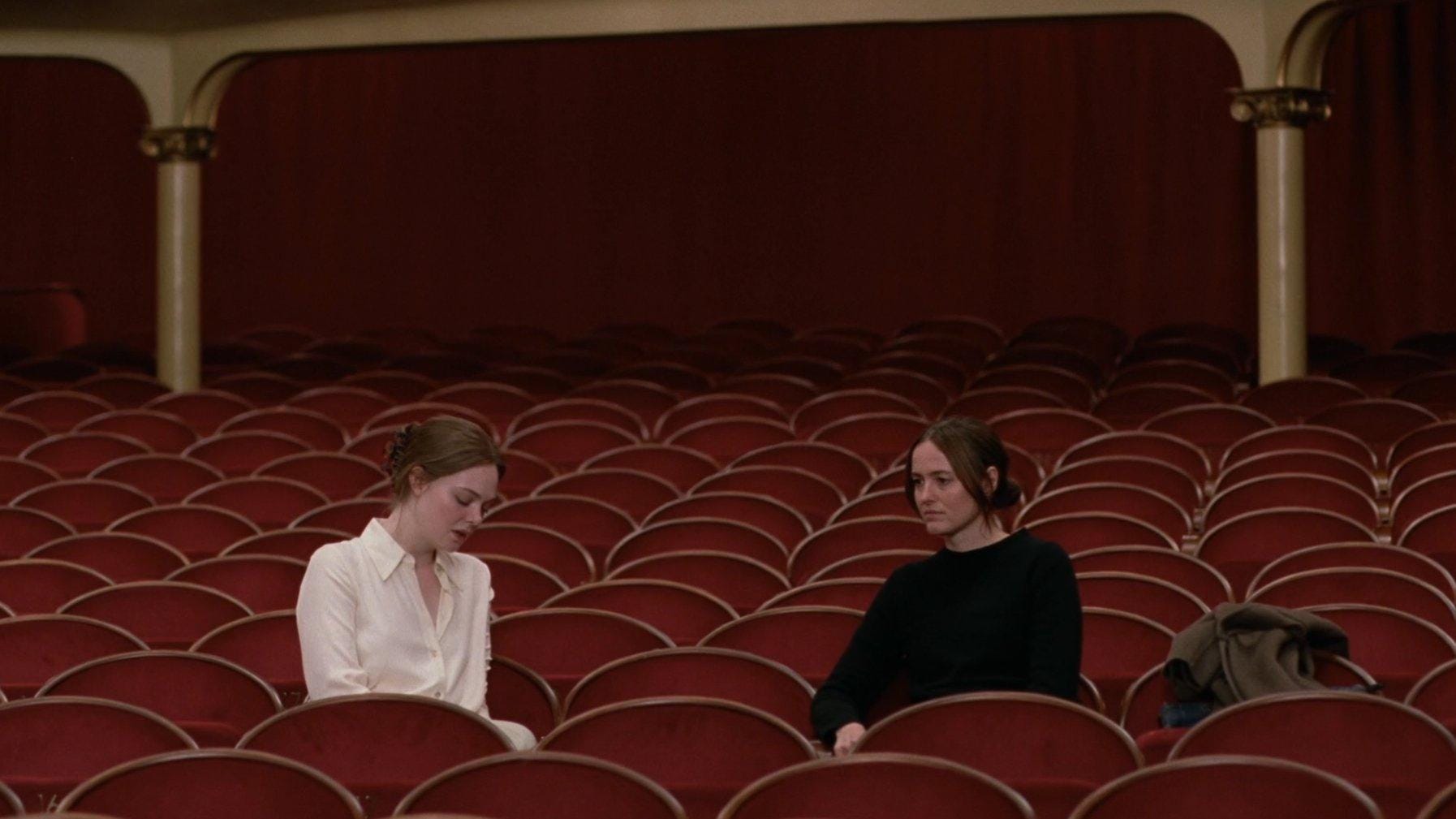
Só queria dizer que esse filme melhorou ainda mais na segunda vez que assisti. Dramas de família sempre acabam me cativando, principalmente os que envolvem relações entre irmãos. Pensei muito em mim e na minha irmã durante o filme. Pensei também sobre como criar algo de valor (perdoe o trocadilho) pode ser um processo de uma vida inteira, por causa de uma conversa entre o velho diretor e seu produtor, quando este último diz ao primeiro algo como: “Você passou 50 anos trabalhando esse tema, e agora você finalmente conseguiu dizer o que queria”. Saí do cinema pensando que bom que esse filme existe. Esse é meu candidato ao Oscar <3
Marty Supreme - Josh Safdie (2025)
Vou ser polêmica e ir contra o Zeitgeist: eu odiei esse filme. Não porque o filme é mal executado ou algo do tipo, pelo contrário, mas porque eu DETESTEI o personagem homônimo interpretado por Oscar-desperate-timothee-chalamet. É muito difícil gostar de um filme (ou ao menos aproveitar suas partes boas) quando ele é totalmente centralizado em um único personagem — em uma grande personalidade ofuscante que determina a história — e esse personagem é absolutamente nojento para mim. Não estou dizendo que eu só posso gostar de um filme se eu gostar do protagonista — não sou ingênua nem filistina, nem mesmo besta — mas existe um limite até onde o desgosto pode ir e, ao ultrapassá-lo, a experiência do filme fica totalmente subjetiva e marcada pelo ódio irracional da pessoa fictícia que estou assistindo.
Por isso, apesar das altas expectativas que eu tinha para Marty Supreme, não consegui gostar do filme. Talvez você possa dizer que Timotheé é bom demais no que faz para seu próprio bem e que Marty não é real e não pode me machucar. Mas não adianta. Josh Safdie conseguiu inventar um homem que reúne tudo o que eu mais odeio numa pessoa: egoísmo, mitomania, desonestidade, desconsideração, ingratidão, individualismo; ele é um narcisista misógino que impõe seus delírios de grandeza nos outros, inclusive nos coitados que tentam genuinamente ajudá-lo; não se importa com o tempo ou consequências de mais ninguém fora dele mesmo, e ele não tem LIMITE. Eu saí do cinema com vontade de cuspir na cara dele.
Não consigo espantar a sensação de que esse filme (dentre outros dos Safdie e similares) glorifica um tipo desprezível de masculinidade patética e destrutiva. Mesmo que Marty caia no fim, essa glorificação existe no trajeto, em certo grau. Eu e meu namorado reassistimos O Retorno do Rei no cinema recentemente (foi uma experiência transcendental) e eu comentei com ele que Marty é basicamente o anti-Aragorn.
Diário de Filmes de Janeiro:
Sorry, Baby (2025)
Down with Love (2003)
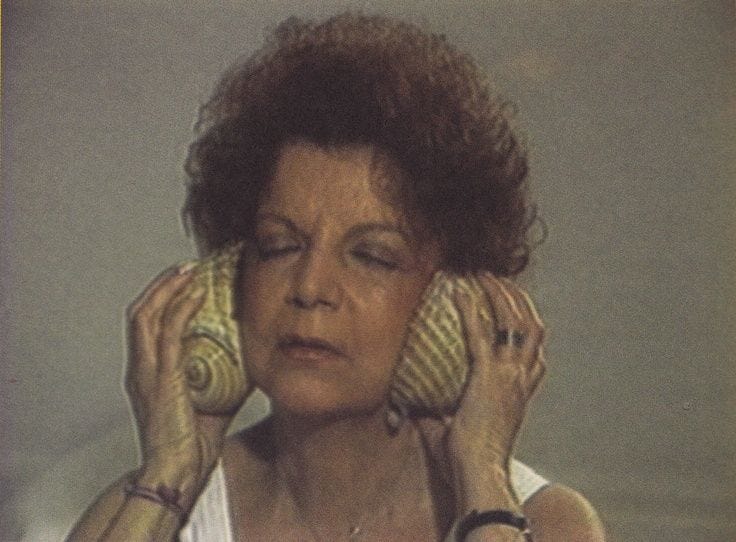
Jogo de Cena (Playing) (2007)
Hamnet (2025)
Sentimental Value (2025)
Silence (2016)
The Lord of the Rings: Return of the King (2003)
Marty Supreme - Josh Safdie (2025)
Play Time - Jacques Tati (1971)
Chungking Express (1994)
ESCUTADOS
Crying Laughing Loving Lying - Labi Siffre
Esse com certeza foi meu álbum de janeiro; ouvi inúmeras vezes porque ele me dá uma paz e um contentamento automático em meio a momentos de melancolia ou ansiedade. Ouvir Cannock Chase imediatamente me faz sentir que vai ficar tudo bem.
Aperture - Harry Styles
Sempre que Harry lança música nova eu me lembro de como era ter 12 anos e ser fã de One Direction. Me divirto muito com essa relação nostálgica e meio parasocial (mas sem ser creepy) que tenho com certos artistas, e fico feliz de poder continuar gostando da música dele de forma orgânica. Aperture é muito boa, e o videoclipe é no mínimo original…
The Sofa - Wolf Alice
De vez em quando eu encontro uma música que me consola de um jeito muito específico. Ano passado a música “I Think I Understand” de Joni Mitchell cumpriu esse papel (“fear is like a wilderland… below me sleepy rooftops round the harbour, It’s there I’ll take my thirsty fill of friendship over wine, forgetting fear, but never disregarding her”), sendo agora substituída por “The Sofa” de Wolf Alice. Escutei dezenas de vezes e é catártico pra mim. Fun fact: Ellie Rowsell, a vocalista de Wolf Alice, é quem faz o backing vocal de Aperture.

Dear readers,
The Methought monthly review will change a little in 2026: the format is now leaner, more focused on my experience with the object rather than just talking about the object itself. In other words, I will no longer comment on everything I have read, watched, and listened to; I will select a few highlights (either because I loved or hated them) to share with you.
In addition, starting this month, we will be reading Shakespeare together at the Methinks Book Club! It will be one play per month, and all discussion and posts about the club will take place here on Substack. You can check the details here:
Starting in March, the club will be for paid subscribers only. Other than that, I will continue with occasional essays on literature.
One thing that hasn’t changed is the poem of the month! Here is the one chosen for January 2026, quite monothematic:
Sonnet 30 - William Shakespeare
When to the sessions of sweet silent thought
I summon up remembrance of things past,
I sigh the lack of many a thing I sought,
And with old woes new wail my dear time’s waste:
Then can I drown an eye, unus’d to flow,
For precious friends hid in death’s dateless night,
And weep afresh love’s long since cancell’d woe,
And moan th’ expense of many a vanish’d sight;
Then can I grieve at grievances foregone,
And heavily from woe to woe tell o’er
The sad account of fore-bemoaned moan,
Which I new pay as if not paid before.
But if the while I think on thee, dear friend,
All losses are restor’d, and sorrows end.
READ
Ending 2025 and beginning 2026 with Jane Austen
I have been a fan of Jane Austen for years, but I don’t think I have ever felt such emotional appreciation for her and the universe she created until now. Spending November, December, and part of January in Jane’s company was an essential source of comfort for me. Lately, there have been days when the only thing I wanted to do was read Sense & Sensibility, Emma, or Claire Tomalin’s biography. Spending hours immersed in Marianne’s dramas and Emma’s blunders genuinely pulled me out of my own head and gave me some much-needed peace of mind at the end of the year. It’s a troubled time for many people. My medical recommendation for such cases is to read Jane Austen.
I read S&S for the first time 10 years ago and remember not liking it. I especially remember hating Marianne. Imagine my surprise when not only did I love the book on rereading it, but I also identified with Marianne in many ways. For those who have read it, this may seem strange; after all, Marianne is a dramatic, stubborn, overly romantic teenager with dogmatic beliefs, and her character arc is precisely to become someone more balanced and rational.
Well, I kind of made the opposite journey. As a teenager, I was terrified of any honest display of feelings (I was the typical person who unsuccessfully pretended to be stoic; I think many go through this phase), and a big part of growing up was not only accepting my sentimentality but also learning to appreciate it and express it with honesty and confidence. Just saying that is kind of cringe, but what can you do if it’s true? All this to say that I felt understood by Marianne and was able to laugh a lot at myself as I related to her follies. It was sort of cathartic. I think the ideal woman is the exact middle ground between Marianne and Elinor Dashwood.
After finishing my successful rereading of S&S, I wasn’t ready to leave Austen’s comforts behind, so I followed up with a rereading of Emma (which was already in my bookish plans for 2026). Emma is my second favourite Austen book, and although it’s a story in which ‘nothing happens’ — especially compared to S&S (or even P&P) — I always end up getting involved in the lives of these extremely beloved characters. I have a lot of love for Emma, Mr Knightley (the best Austenian man, by the way), Mr Woodhouse and the Westons. Even the wacky Miss Bates has her charm. And Frank Churchill’s mistakes are pardonable. In short: everyone is great, I love them as if they were my family (even more than some relatives, actually).
Along with these two re-readings was the author’s biography written by Claire Tomalin, Jane Austen: A Life. Although the book is a bit monotonous because of Tomalin’s dry writing, I was very happy to have reached the end. I’m not much of a biography reader, especially if they’re long, but to my own surprise, I managed it. Perhaps this is the greatest proof of my interest and admiration for Jane. I loved learning about her family history and being able to see her a little as a person, since she is such an invisible figure in history. This is because almost all of her letters were destroyed after her death, there are no portraits of her made during her lifetime, she never married or had children, and most of the Austen family’s accounts of Jane are conflicting. The most reliable witness is her sister Cassandra, Jane’s great companion from childhood until her death.
She had a difficult life, but nothing tragic. What saddens me most is knowing that she never lived to see the extent of her success (which came just a few decades later), she never achieved financial independence (or even security) through her work, and, judging by her unfinished works, she still had much to accomplish had she not fallen victim to a mysterious illness, passing away at only 41 years of age. I would give anything to bring her back to life and show her how much she is loved by the public (and make her watch the Pride and Prejudice miniseries with Colin Firth).
January Reading Diary:
Four Quartets - T.S. Eliot (reread)
Jane Austen: A Life - Claire Tomalin
Emma - Jane Austen (reread)
On Wanting to Change - Adam Phillips
Songs of Innocence and Experience - William Blake
WATCHED
Hamnet - Chloé Zhao (2025)
We know that everyone cried watching this film, but I doubt anyone cried more than I did (ask my friends). As a big Shakespeare fan, it goes without saying that this film would be special to me, but even I didn’t imagine how much. I take my Shakespeare very seriously, and I was ready to criticise any ‘flaws’ in the adaptation. What a lovely surprise it was to see how Zhao and O’Farrell did an excellent job of translating the essence of a work as complex as Hamlet, exceeding all my expectations.
I also enjoyed how the story imagines Shakespeare’s personal life and fills in the gaps in his biography. This lack of information is something that has bothered scholars for years, and in the film, we see a kind of alternative reality endowed with great beauty and good taste: the personalities of the children, the relationship between them, Shakespeare’s solemn family, and especially the incredible character of Agnes/Anne, Shakespeare’s wife. Everything was done with extreme respect and sensibility to the original work, and I felt that Zhao really understood Hamlet, which is rare (and yes, I have the authority to determine this having read Hamlet seven times).
But above all, what I liked most (and the main reason for my tears) was to see, so well put, how Shakespeare’s work remains eternally relevant; how new audiences, through cinema, can once again be at the Globe Theatre reliving the play’s sorrow in community; how that text still has an impact 400 years later — this constant reinvention of literature is beautiful, and how it is one of the few things that exist beyond time. Thinking about all this made me extremely emotional.
Sentimental Value - Joachim Trier (2025)
I just wanted to say that this film got even better the second time I watched it. Family dramas always captivate me, especially those involving sibling relationships. I thought a lot about myself and my sister during the film. I also thought about how creating something of value (pun intended) can be a lifelong process, due to a conversation between the old director and his producer, when the latter says something like, ‘You spent 50 years working on this theme, and now you’ve finally managed to say what you wanted to say.’ I left the cinema thinking how nice it is that this film exists. This is my Oscar nominee <3
Marty Supreme - Josh Safdie (2025)
I’m going to be controversial and go against the Zeitgeist: I hated this film. Not because the film is poorly executed or anything like that, on the contrary, but because I DESPISED the eponymous character played by Oscar-desperate-Timothée Chalamet. It’s very difficult to like a film (or at least enjoy its good parts) when it’s totally centred on a single character — a large, overbearing personality who determines the story — and that character is absolutely disgusting to me. I’m not saying that I can only like a film if I like the protagonist — I’m not naive or philistine, I’m not even a fool — but there is a limit to how far disgust can go, and once you cross that line, the film experience becomes totally subjective and marked by irrational hatred of the fictional person I’m watching.
So, despite the high expectations I had for Marty Supreme, I couldn’t enjoy the film. Perhaps you could say that Timothée is too good at what he does for his own good and that Marty isn’t real and can’t hurt me. But it doesn’t matter. Josh Safdie managed to invent a man who embodies everything I hate most in a person: selfishness, mythomania, dishonesty, inconsideration, ingratitude, individualism; he is a misogynistic narcissist who imposes his delusions of grandeur on others, including the poor souls who genuinely try to help him; he doesn’t care about anyone else’s time or consequences, and he has no LIMITS. I left the cinema wanting to spit on his face.
I can’t shake the feeling that this film (among others by the Safdies and their kind) glorifies a despicable type of pathetic and destructive masculinity. Even though Marty falls in the end, this glorification exists along the way, to a certain degree. My boyfriend and I recently rewatched The Return of the King at the cinema (it was a transcendental experience) and I pointed out to him that Marty is basically the anti-Aragorn.
January Movie List:
Sorry, Baby (2025)
Down with Love (2003)
Jogo de Cena (Playing) (2007)
Hamnet (2025)
Sentimental Value (2025)
Silence (2016)
The Lord of the Rings: Return of the King (2003)
Marty Supreme - Josh Safdie (2025)
Play Time - Jacques Tati (1971)
Chungking Express (1994)
LISTENED TO
Crying Laughing Loving Lying - Labi Siffre
This was definitely my album of January; I listened to it countless times because it gives me peace and automatic comfort in moments of melancholy or anxiety. Listening to Cannock Chase immediately makes me feel that everything will be alright.
Aperture - Harry Styles
Whenever Harry releases new music, I remember what it was like to be 12 years old and a fan of One Direction. I really enjoy this nostalgic and somewhat parasocial (but not creepy) relationship I have with certain artists, and I’m happy to be able to continue enjoying his music organically. Aperture is very good, and the music video is original, to say the least...
The Sofa - Wolf Alice
Every now and then I find a song that comforts me in a very specific way. Last year, Joni Mitchell’s ‘I Think I Understand’ fulfilled that role (‘fear is like a wilderland... below me sleepy rooftops round the harbour, It’s there I’ll take my thirsty fill of friendship over wine, forgetting fear, but never disregarding her’), now replaced by Wolf Alice’s ‘The Sofa’. I’ve listened to it dozens of times and it’s cathartic for me. Fun fact: Ellie Rowsell, the lead singer of Wolf Alice, does the backing vocals on Aperture.
I also loved Sentimental Value! Definitely favorite film of 2025, and also my personal Oscar nominee. I was put off enough by the Marty Supreme trailer to not want to see it and your review makes me think I made the right choice there. 😅