

Methought - August/2025
Monthly wrap-up: read the best book of the year so far (and two others that were not so good), yet another Rowlands/Cassavetes film, my first Bergman experience, and published my second short story.

Scroll down to read the English version
Caros leitores,
Agosto foi o pior mês do ano para mim, apesar de ter lido o melhor livro até agora. Às vezes até fazer o que se gosta (vulgo ler, estudar e escrever, principalmente para essa newsletter) cansa e ganha um ar de obrigação. Decidi tirar umas semanas de pausa, o que explica o “atraso” do Methought de Agosto. Espero ter recuperado o entusiasmo, mas não farei grandes promessas por enquanto — não quero me expor, mas digamos que eu me cobro demais, além do que seria psicologicamente saudável.
Sem mais lamúrias, vamos ao resumo mensal e ao poema do mês. O escolhido foi Byzantium de W.B. Yeats, que li no fim de agosto e gostei muito, muito mesmo.


Em agosto também publiquei meu segundo conto, e adoraria que você lesse:
Um Homem Civilizado

For my English-speaking subscribers: As a bilingual writer, I sometimes post pieces in my native language, which is Portuguese. This is a short story I wrote over the last four or five months. I feel more confident writing fiction in Portuguese, but I plan to translate my short stories or try my hand at writing fiction in English. The story is about a B…
LIVROS &TC.
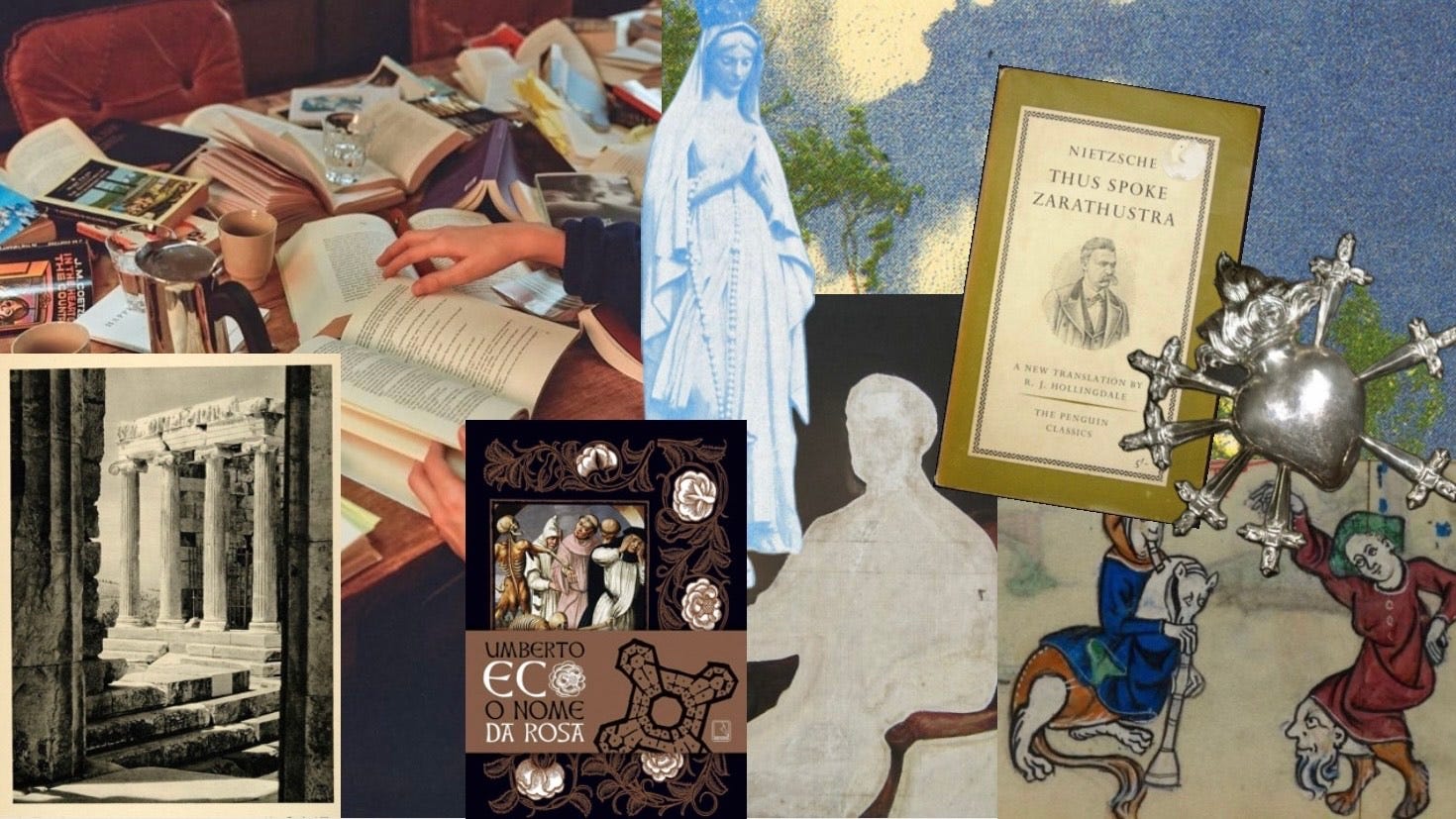
O Nome da Rosa - Umberto Eco (1980)
Possivelmente o melhor livro que li esse ano até agora, e não imagino que seja possível superá-lo. Eu fiquei tão imersa na história que durante uma semana eu não consegui (e nem quis) fazer mais nada a não ser ler essa maravilha. É impressionante a quantidade de temas difíceis que Eco consegue abordar com a devida profundidade sem deixar a narrativa entediante ou excessivamente didática (Tolstói, por exemplo, não tem a mesma proeza ao inserir discussões em seus romances).
O Nome da Rosa é narrado por Adso de Melk, um monge beneditino que acompanha Guilherme de Baskerville, franciscano encarregado de investigar a misteriosa morte de um monge em um mosteiro na Itália. Ao longo de uma semana, ambos testemunham diálogos e acontecimentos — ao mesmo tempo macabros e fantásticos — que transformam profundamente suas visões de mundo. Para mim, o tema central da obra é — ainda que soe um tanto clichê — o poder do conhecimento, o qual nasce da independência intelectual quando adquirimos meios para interpretar o mundo por conta própria. Na Idade Média (e é claro que isso também se aplica aos dias de hoje), não era do interesse da elite religiosa e política que os súditos pudessem pensar por si mesmos. Eco também destaca um elemento que, à primeira vista, parece inofensivo, mas possui enorme potencial disruptivo: o riso. O riso desmoraliza e dessacraliza instituições e crenças, abre espaço para questionamentos que corroem autoridades e, em última instância, pode desencadear profundas reavaliações conceituais — algo que a Igreja Católica, interessada em preservar o statu quo, jamais poderia admitir.
Este é um livro brilhante, conduzido com maestria em cada uma das propostas apresentadas pelo autor — nada é posto ao acaso ou fica sem uma explicação satisfatória. Ainda assim, o mais impressionante é que toda essa engenhosidade intelectual não compromete a diversão da leitura: a narrativa permanece envolvente em seu formato “murder mystery” até o fim.
Assim Falou Zaratustra - Friedrich Nietzsche (1883)
Comecei esse livro em Janeiro deste ano e fui lendo com longas pausas pois além de complexo é muito, muito entediante. Eu já li algumas obras de Nietzsche e eu gosto dele (apesar de não concordar com sua filosofia), mas Zaraturstra foi uma péssima experiência. Eu só fui até o fim por questões de princípio: não consigo abandonar livros a não ser que seja algo hediondo (o que, apesar de toda ruindade, não era o caso desse livro).
Quando me proponho a ler um livro de filosofia, eu busco aprender algo que sirva como instrumento interpretativo para o mundo. Por exemplo, em O Nascimento da Tragédia — o primeiro livro de Nietzsche e o que mais recomendo a vocês — eu aprendi sobre o Apolíneo e o Dionísico, parâmetros estéticos que uso até hoje para analisar obras de arte. Não aprendi nada em Zaratustra e nem senti que entendi mais da filosofia de Nietzsche. Isso não significa que desisti do filósofo, afinal ainda pretendo ler A Genealogia da Moral e Além do Bem e do Mal, mas serão leituras para um futuro distante.
O Abismo de São Sebastião - Mark Haber (2023)
Eu tinha grandes expectativas para este livro que infelizmente não se concretizaram. Este romance narra a história de dois críticos de arte obcecados pela mesma pintura: O Abismo de São Sebastião. Depois décadas de amizade e parceria intelectual, eles acabaram brigando e se tornando nêmesis acadêmicos. Agora na velhice, um vai visitar o outro em seu leito de morte, e é esse trecho que acompanhamos. A história em si é interessante e divertida, mas a escrita me impediu de apreciar o romance como eu esperava. Composto de parágrafos de no máximo duas páginas, escrito em primeira pessoa e repleto de repetições incessantes e intencionais, o autor terminou me alienando ao invés de me impressionar com sua experimentação estilística. Um livro tão curto (menos de 200 páginas) terminou sendo cansativo.
ARTIGOS, ENSAIOS, PALESTRAS
The New Literalism Plaguing Today’s Biggest Movies - Namwali Serpell for the New Yorker
It’s hard to say which came first: our so-called media illiteracy or the dumbing down of the media. Complaints about our inability to read, interpret, or discern irony, subtlety, and nuance are as old as art. What feels new is the expectation, on the part of both makers and audiences, that there is such a thing as knowing definitively what a work of art means or stands for, aesthetically and politically. This strikes me as a blatant redefinition of art itself.
Apesar de concordar com os seus argumentos, não gostei da forma como ela os apresentou, devido ao tom excessivamente cínico. Sim, há uma certa falta de sofisticação estranha na linguagem usada nos meios de comunicação hoje em dia, especialmente nos filmes, mas isso é definitivamente um sintoma e não uma causa. Por mais que tudo pareça ter ido por água abaixo, odeio a voz apocalíptica no jornalismo de hoje — em vez de questionar o status quo atual, eles o declaram, o que não ajuda a formentar discussões relevantes.
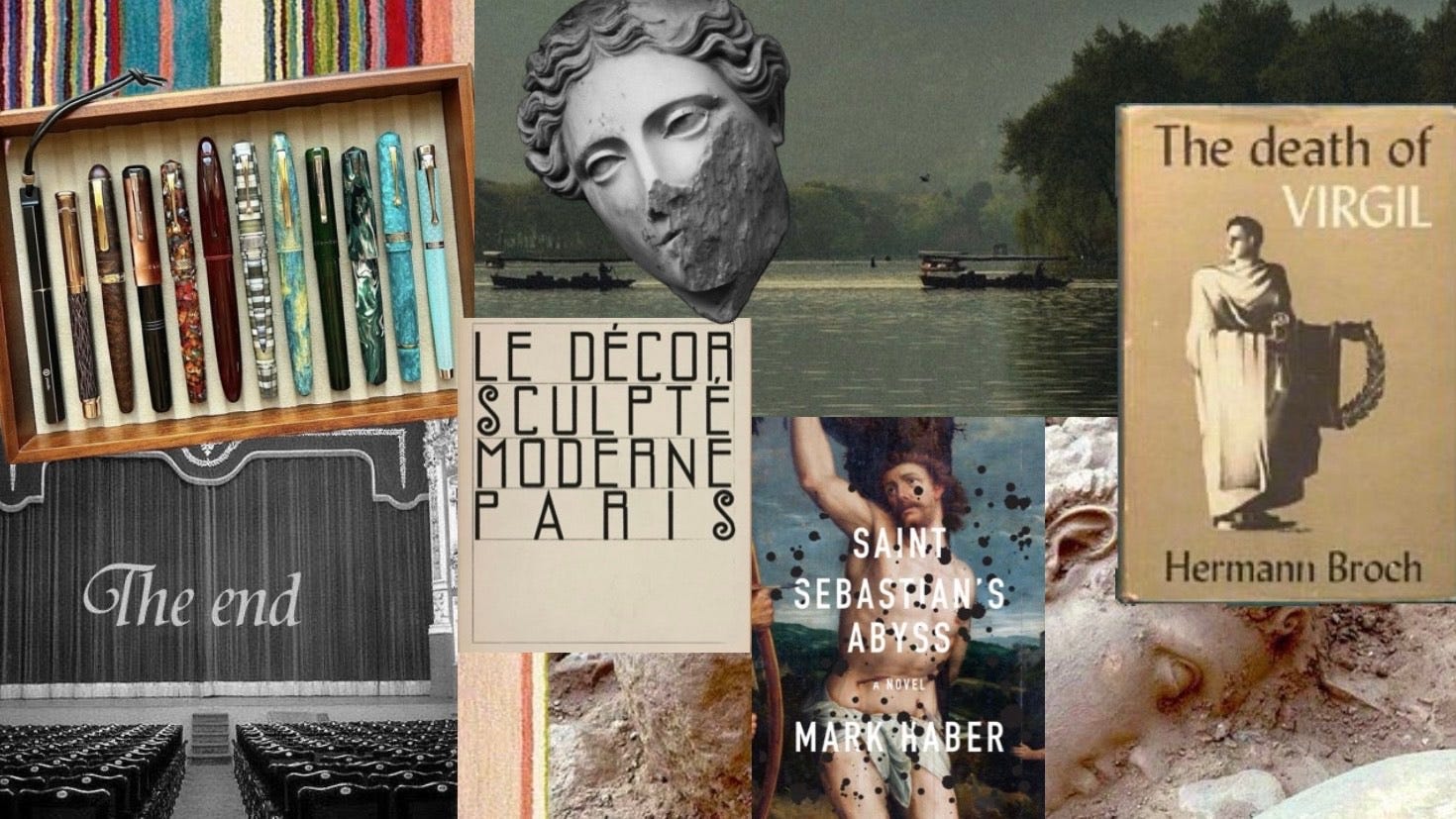
A Morte de Virgílio e Herman Broch - Programa Literatura Fundamental com Prof. Daniel Bonomo
Literatura Fundamental era um programa de televisão educativo que ia ao ar há mais ou menos dez anos atrás. Cada episódio é sobre um autor ou obra da literatura clássica, de diversos países e épocas, contando com um professor universitário especialista no assunto. Como pretendo ler A Morte de Virgílio ainda esse ano, resolvi assistir esse vídeo para me motivar e me dar um pouco de contexto — já adianto que o prof. Daniel é ótimo! Todos os episódios estão disponíveis no YouTube (tem mais de 100 e eu sou viciada em assistir).
Entrevista com o autor Mark Haber sobre “O Abismo de São Sebastião” - Third Place Books Youtube Channel
Como mencionei, não gostei das escolhas estilísticas de Haber em relação à sua escrita, e elas me deixaram tão confusa que precisei saber por que ele escreveu daquela maneira. Então, procurei uma entrevista com ele, e essa foi ótima, pois realmente esclareceu alguns aspectos do livro para mim. Contudo, um livro deve ser capaz de se sustentar por si só e falar por si mesmo, já que o escritor não acompanha a sua compra. De qualquer forma, achei a entrevista interessante e ainda quero ler seus outros romances.
FILMES & SÉRIES
Materialists - Celine Song (2025)
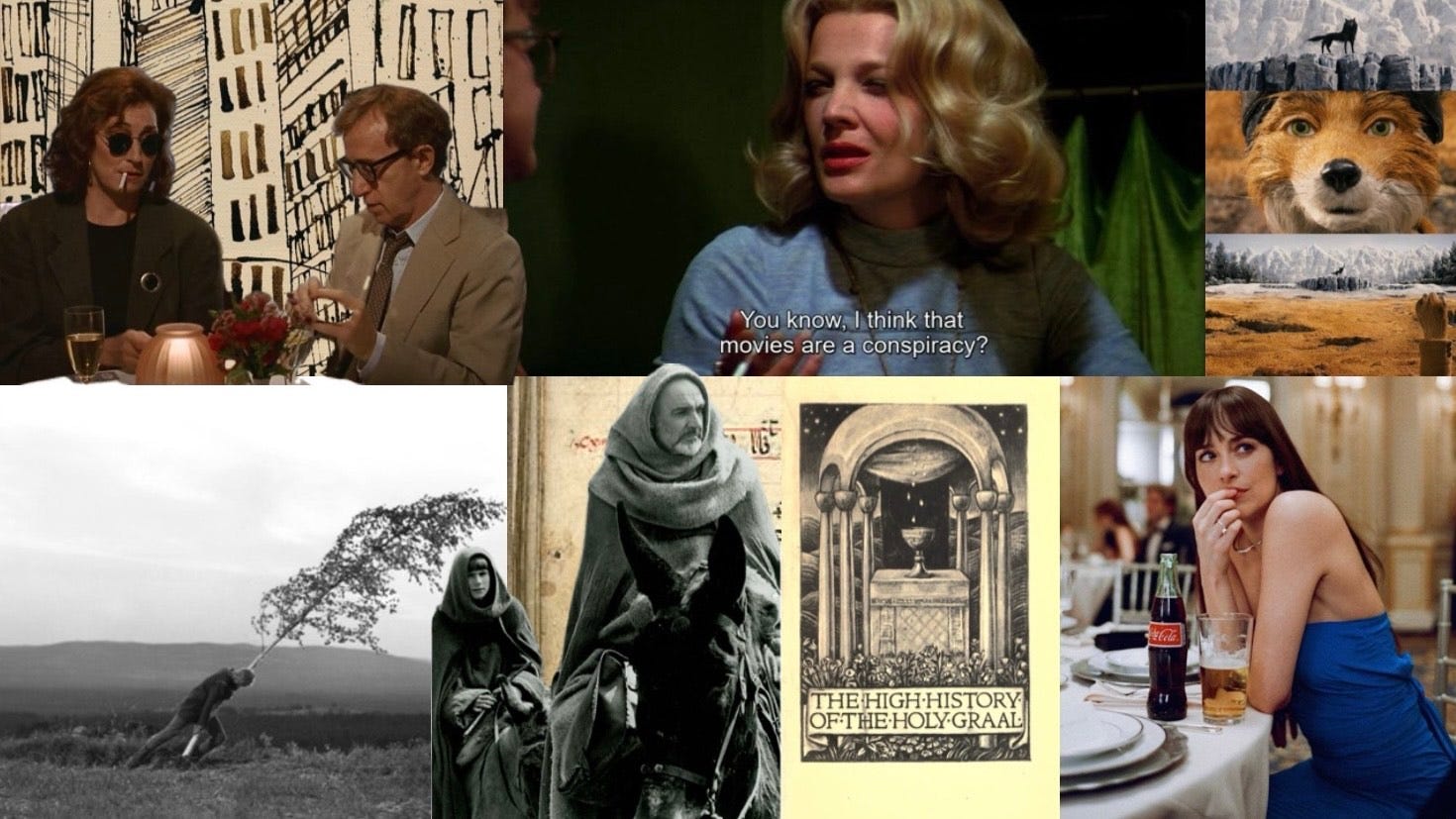
Achei esse filme divertido porém sem carisma, sem elã. Ninguém ali consegue vender a intensidade dos sentimentos que verbalizam — não há tensão de nenhum tipo: nem dramática, nem sexual. Como eu e minhas amigas concluímos, é um filme castrado. Entendo a mensagem de Celine Song e não só concordo como aprecio o que ela tenta dizer. Mas numa narrativa (e principalmente num filme) a forma como a mensagem é passada — isto é, sua execução — merece um cuidado maior. Eu sinceramente não sei como alguém que fez Past Lives (um dos meus filmes favoritos e que me destruiu emocionalmente) conseguiu fazer algo tão mediocre em seguida. Talvez ela tenha gasto tudo o que tinha ali? Sinceramente espero que não.
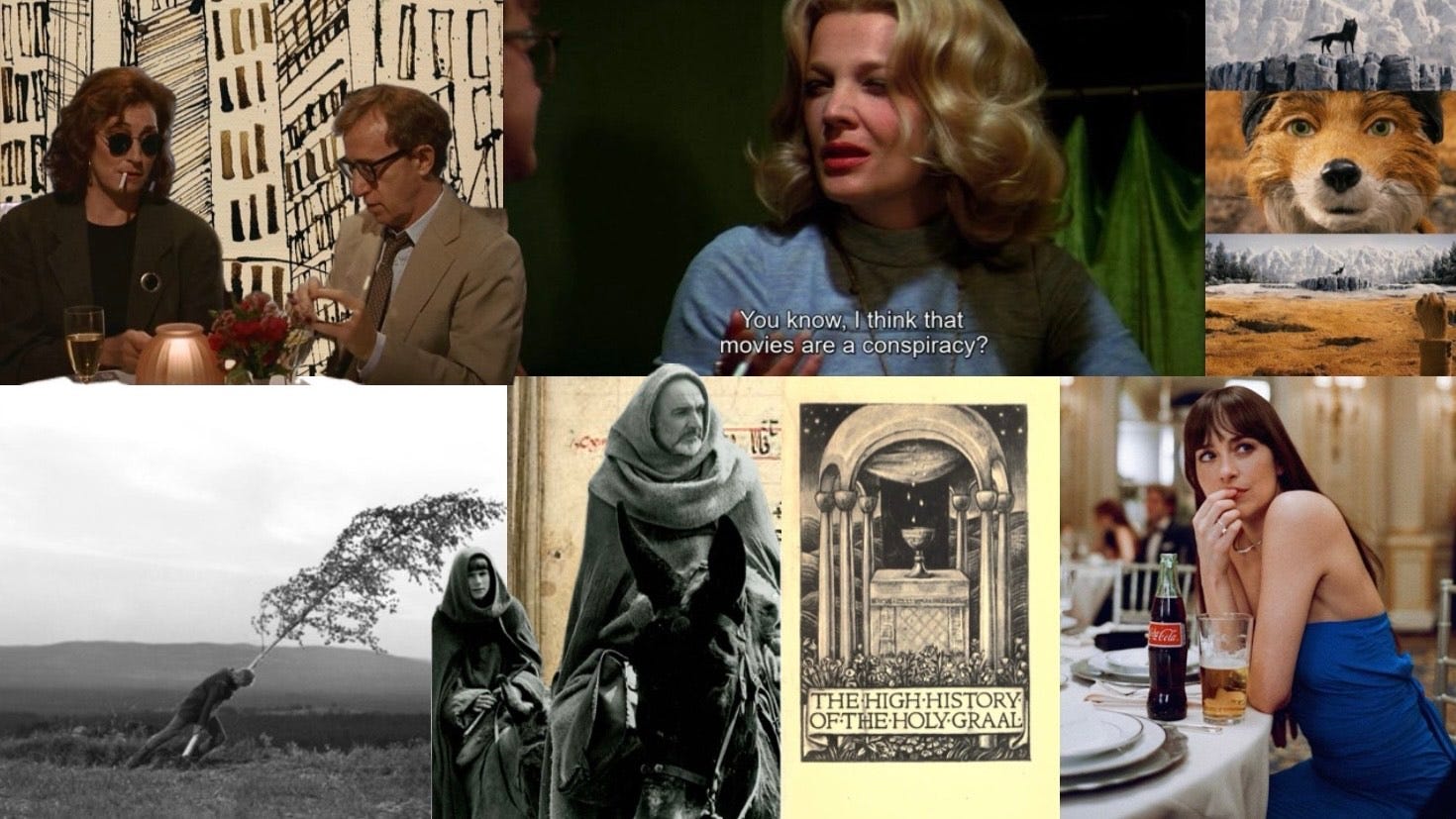
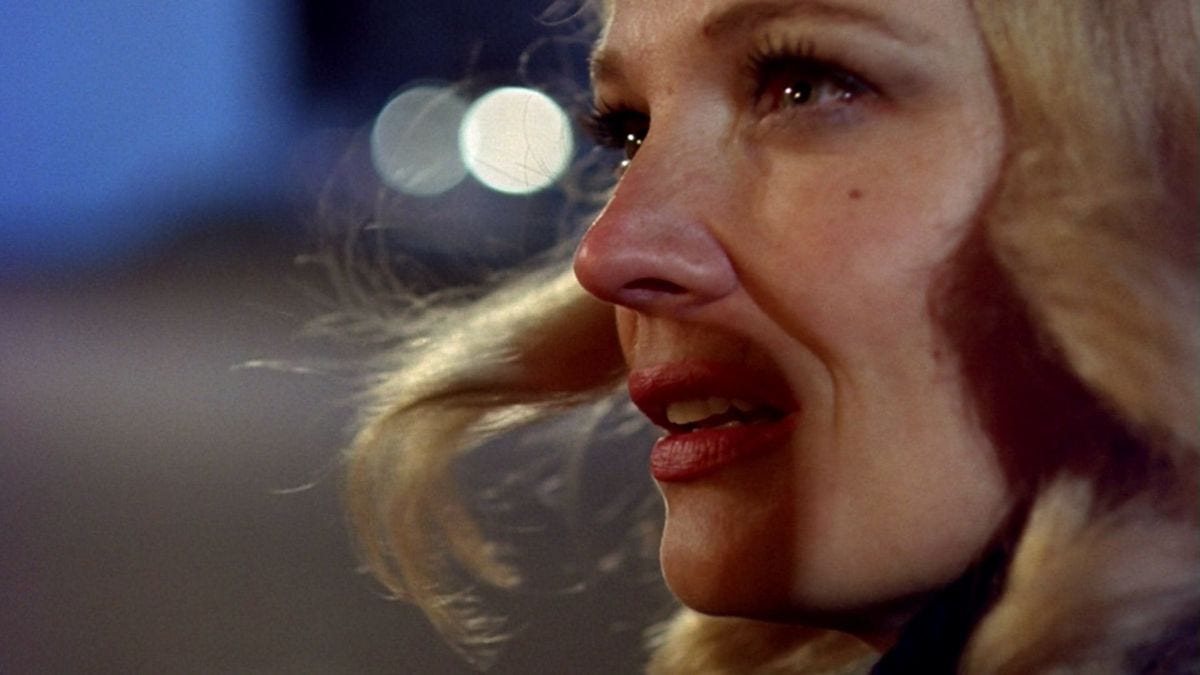
Minnie and Moskowitz - John Cassavetes (1971)
Solidão e amor são temas comuns nos filmes de Cassavetes, e eu gosto que ele tenta normalizar expressões amorosas não convencionais, pouco ponderadas ou simplesmente absurdas. Os personagens de seus filmes estão sempre numa busca angustiante por conexão e afeto, e é uma busca verdadeira, afinal, todos queremos isso no fim das contas, mas um filme como este pode ser bastante incômodo por representar o indivíduo em seu estado mais patético de solidão.
Minnie (Gena Rowlands) é uma mulher bela, solitária e desiludida. A melhor cena do filme é quando ela faz um monólogo sobre como o cinema nos traiu ao prometer romances com pessoas heróicas e apaixonadas; nos filmes ninguém envelhece e ninguém pode mentir sem que no final a verdade seja revelada — e na vida real é quase o oposto. Ou pelo menos essa é a experiência da pobre Minnie, que passa o filme inteiro submetida a homens horríveis, inclusive o maluco esquisitíssimo do Seymour (Seymour Cassel), seu par romântico. Seymour é uma versão masculina da Mabel de A Woman Under the Influence, só que sem a repressão emocional. Ele (por ser homem, claro) está livre para se comportar da forma mais absurda — beirando a violência — por amar demais. De alguma forma, essas duas pessoas desajeitadas e carentes se encontram e se complementam. Pessoalmente, acho que Minnie merecia coisa melhor.
The Virgin Spring - Ingmar Bergman (1960)
Esse filme poderia facilmente ser uma peça de Shakespeare: situada na idade média, essa é uma tragédia envolvendo uma família de fazendeiros católicos que possuem duas filhas: uma adotada e uma biológica, a primeira é uma rebelde que ainda reza para Odin e que está grávida de um bastardo, a segunda é a “rainha da primavera”, religiosa, virgem e linda. Quando as duas são enviadas em uma jornada até uma igreja distante, elas são interceptadas por uma figura semelhante aos deuses nórdicos e um grupo de pastores mal intencionados. A tragédia que acontece com uma delas desencadeia uma trama de vingança e retribuição divina, típica das “revenge tragedies” elisabetanas. Gostei do filme mais pelo que ele significa do que pelo que ele realmente é — no mais, achei meio entediante.
Manhattan Murder Mystery - Woody Allen (1993)
Um dos meus “comfort movies” que sempre revejo quando preciso levantar meu astral. O cenário “outono em Nova York” e os protagonistas na terceira idade usando suéters de tricô amenizam o horror esperado de um assassinato e transformam a trama numa comédia espirituosa e existencialista, no melhor estilo que Woody Allen sabia fazer. Allen e Diane Keaton interpretam um casal de classe média alta, meio entediados com as próprias vidas. Quando uma vizinha morre repentinamente, Keaton começa a desconfiar que o marido a matou. O mistério é bem mais mirabolante do que se imagina, e realmente eu sempre me divirto assistindo.
The Name of the Rose - Jean-Jacques Annaud (1986)
Depois de ler o livro, era óbvio que eu tinha que assistir ao filme icônico com Sean Connery interpretando o amado Guilherme de Baskerville. É dificílimo adaptar um livro como O Nome da Rosa, justamente porque boa parte de sua genialidade está na escrita, que não pode ser transmitida totalmente para a linguagem do cinema. Algumas escolhas do filme com relação à caracterização de personagens foram um pouco exageradas e até meio bregas, mas vou perdoar porque, afinal, eram os anos 80. Gostaria que a questão do riso tivesse tido mais destaque tal qual vemos no romance. Infelizmente eu sou aquela pessoa chata que assiste a uma adaptação apontando tudo o que os realizadores fizeram “errado”. Nunca assistam Senhor dos Anéis comigo.
Monty Python and the Holy Grail - Terry Jones, Terry Gilliam (1975)
É impressionante que um humor tão besta, bobalhão e simplório como o de Monty Python consiga me fazer rir tanto. Todos os filmes deles se resumem a mais pura TOLICE, o que é maravilhoso. Mas acho que é isso que significa ter multitudes: saber apreciar o sagrado e o profano. Ver as lendas arturianas distorcidas em sua versão mais absurda (com direito a uma incrível ridicularização dos franceses) , ao passo que camponeses cavando na lama entregam um discurso genial anti-monarquista e ultra social-democrata para um rei Arthur profundamente confuso, serviu para uma grande experiência humorística. Porém, como sempre, acho que os filmes deles se estendem um pouco além da conta.
Fantastic Mr. Fox - Wes Anderson (2009)
Não tem como não amar Wes Anderson não é mesmo? Nunca tinha assistido Fantastic Mr Fox, e achei que seria uma escolha ideal para ver na cama numa noite meio fria. Esse filme é a coisa mais linda do mundo, tanto pela delicadeza na elaboração do stop-motion quanto pela história sobre pertencimento, comunidade e família ilustrada num embate entre animais campestres e fazendeiros gananciosos. Adoro quando uma história funciona perfeitamente bem para crianças e adultos — não é nada fácil fazer isso. Se eu tivesse filhos, mostraria esse filme para eles desde pequenos.
The Naked Gun - David Zucker (1988)
Eu tinha preconceito com esse filme achando que seria estúpido demais — não me entenda mal, é sim bastante estúpido, mas ao mesmo tempo é um humor tão primordial que existe uma alegria infantil em assistí-lo. Ainda não assisti a versão nova com Liam Neeson, mas agora estou curiosa para comparar os dois tenentes Frank Drebin.
MÚSICA & PODCASTS
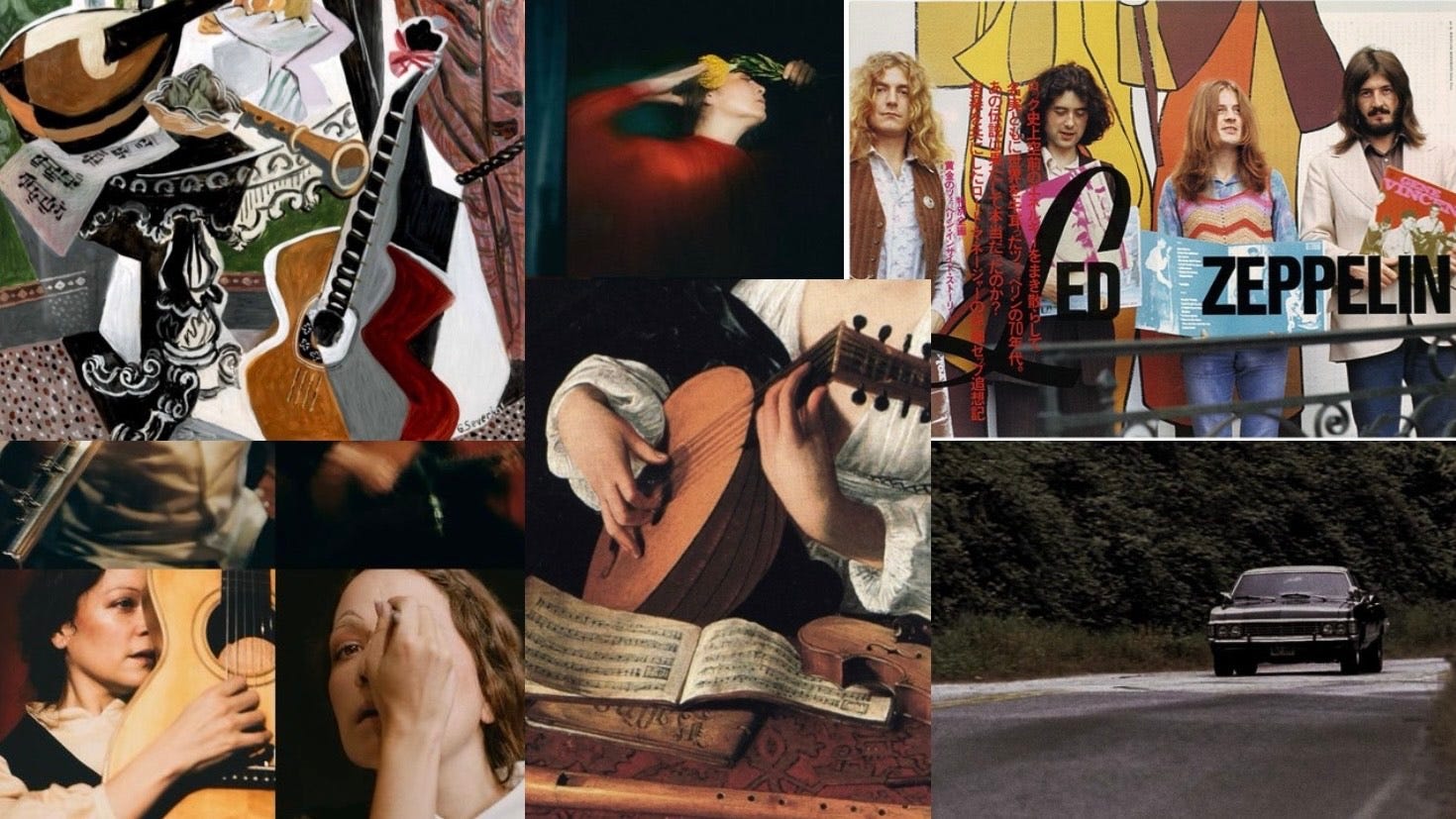
Cancionera - Natalia Laforcade (2025)
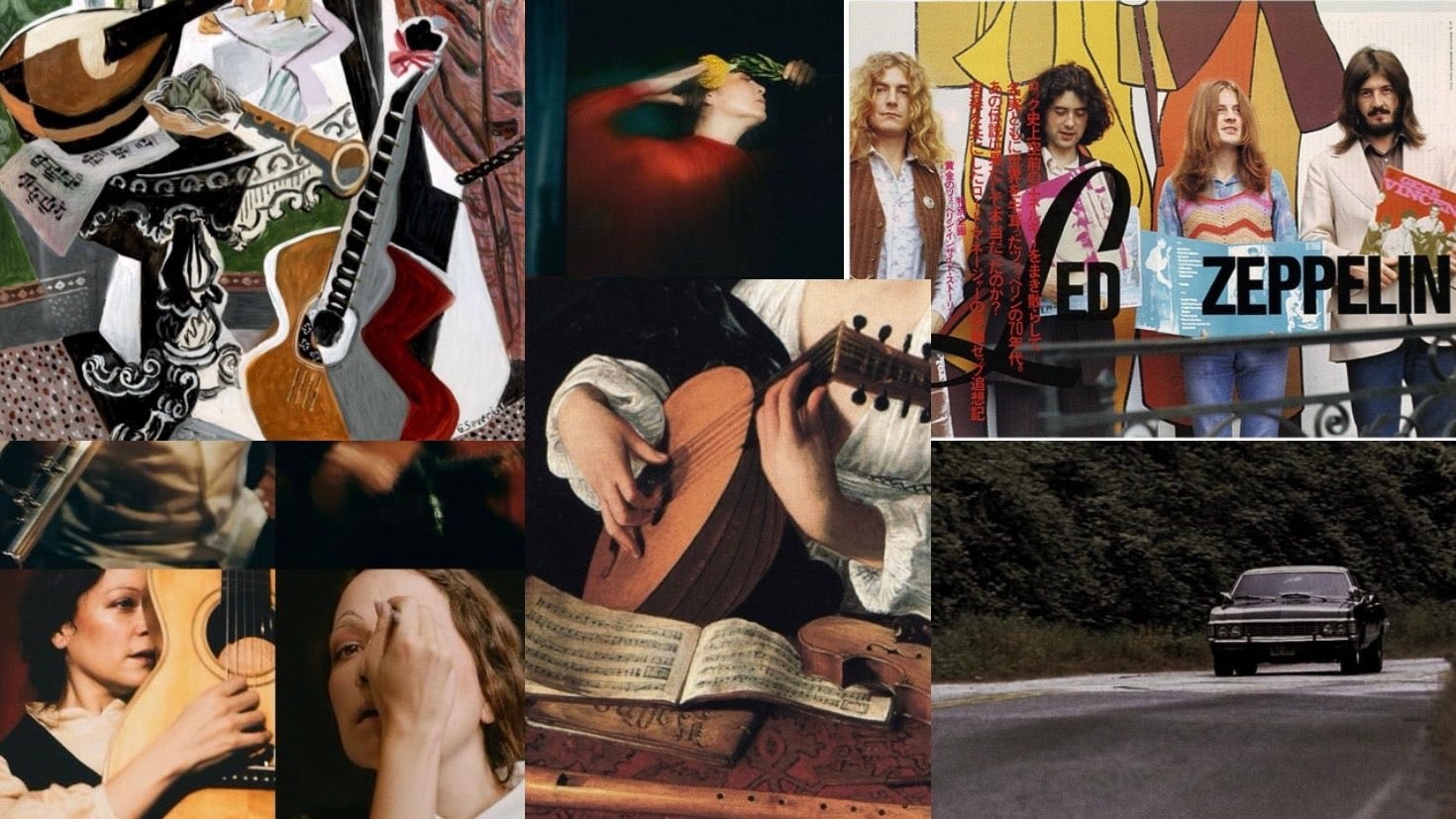
Descobri o trabalho de Natalia Laforcade há alguns anos e fiquei apaixonada por ela. Esse álbum novo traz uma releitura do estilo tradicional das canções latinas, normalmente compostas de voz e violão, incrementando-as com orquestras clássicas, de jazz e do bolero. Minhas favoritas do álbum: Cancionera, Cocos en la Playa, El Palomo y la Negra e Amor Clandestino.
Vale a pena assistir esse videoclipe lindo:
Playlist inspirada em Supernatural
Se você é meu leitor desde os primórdios, talvez saiba do meu gosto inusitado pela série de TV Supernatural. Foi uma das minhas séries favoritas da adolescência, voltei a assistir durante a pandemia, e agora estou revendo (atualmente na 3ª temporada!), o que me dá um bom motivo para desenterrar essa playlist que fiz juntando músicas que tocam na série e músicas que me lembram a série. Aproveitem o rock de pai ao lado de Hozier.
Dear readers,
August was the worst month of the year for me, despite having read the best book so far. Sometimes even doing what you enjoy (i.e. reading, studying and writing, especially for this newsletter) becomes tiring and feels like a chore. I decided to take a few weeks off, which explains the ‘delay’ of August's Methought. I hope I have regained my enthusiasm, but I won't make any big promises for now — I don't want to reveal too much, but let's just say that I demand a lot from myself, more than is psychologically healthy.
Without further whining, let's get to the monthly round-up and poem of the month. The chosen poem is Byzantium by W.B. Yeats, which I read at the end of August and really, really enjoyed.


BOOKS &TC.
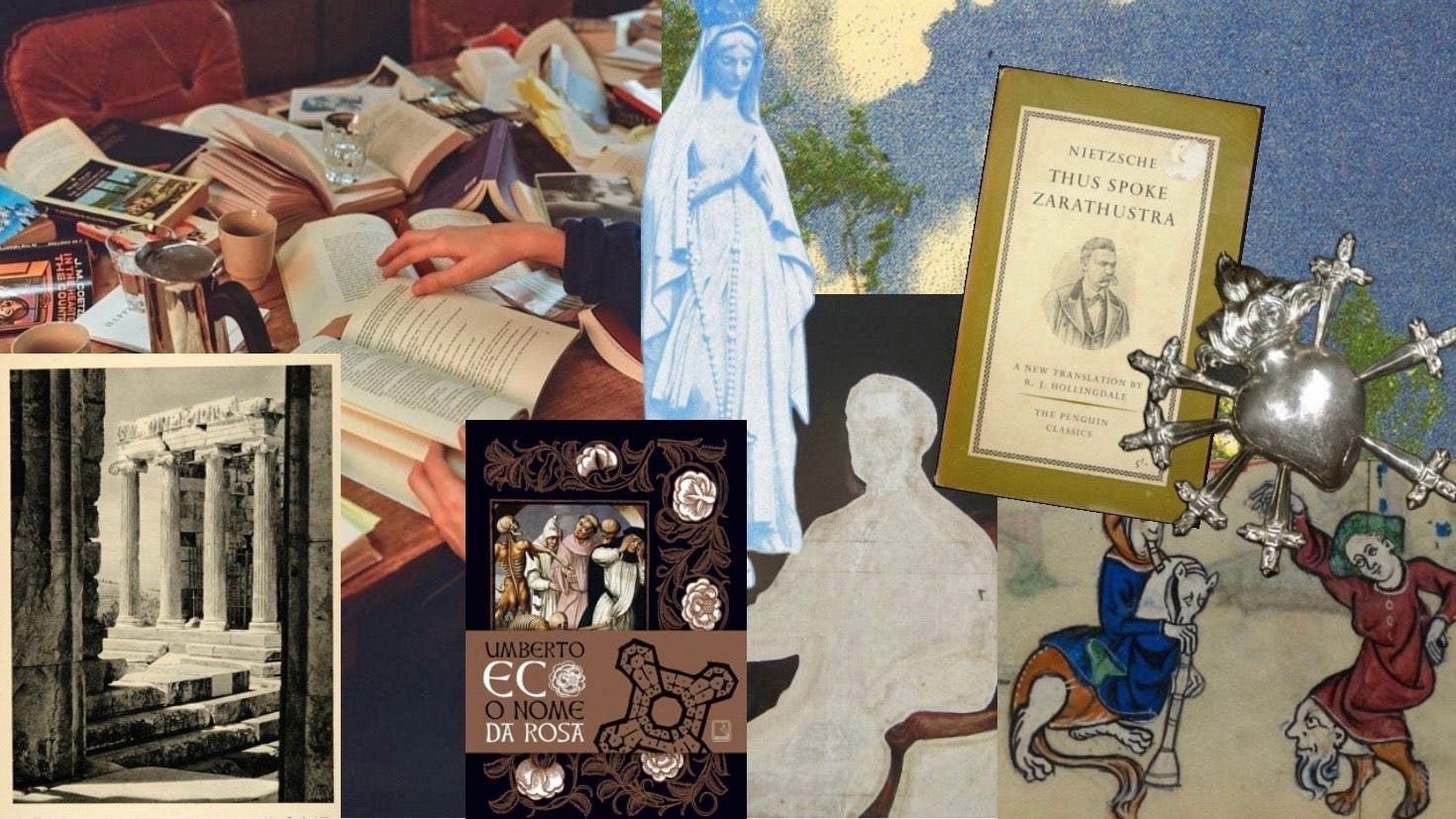
The Name of the Rose - Umberto Eco (1980)
Possibly the best book I've read so far this year, and I can't imagine anything surpassing it. I was so immersed in the story that for a week I couldn't (and didn't want to) do anything else but read this masterpiece. It is impressive how many difficult topics Eco manages to address in depth without making the narrative tedious or overly didactic (Tolstoy, for example, does not have the same skill at inserting discussions into his novels).
The Name of the Rose is narrated by Adso of Melk, a Benedictine monk who accompanies William of Baskerville, a Franciscan commissioned to investigate the mysterious death of a monk in a monastery in Italy. Over the course of a week, both witness dialogues and events — at once macabre and fantastic — that profoundly transform their worldviews. For me, the central theme of the work is — although it may sound somewhat clichéd — the power of knowledge, which arises from intellectual independence when we acquire the means to interpret the world on our own. In the Middle Ages (and of course this also applies today), it was not in the interest of the religious and political elite for their subjects to be able to think for themselves. Eco also highlights an element that, at first glance, seems harmless but has enormous disruptive potential: laughter. Laughter demoralises and desacralises institutions and beliefs, opens space for questions that erode authority and, ultimately, can trigger profound conceptual re-evaluations — something that the Catholic Church, interested in preserving the status quo, could never admit.
This is a brilliant book, masterfully conducted in each of the proposals presented by the author — nothing is left to chance or without a satisfactory explanation. Still, what is most impressive is that all this intellectual ingenuity does not compromise the enjoyment of reading: the narrative remains engaging in its ‘murder mystery’ format until the end.
Thus Spoke Zarathustra - Friedrich Nietzsche (1883)
I started this book in January this year and read it with long breaks because, besides being complex, it is very, very boring. I have read some of Nietzsche's works and I like him (although I do not agree with his philosophy), but Zarathustra was a terrible experience. I only finished it out of principle: I cannot abandon books unless they are truly vile (which, despite all its flaws, was not the case with this book).
When I set out to read a philosophy book, I seek to learn something that serves as an interpretive tool for the world. For example, in The Birth of Tragedy — Nietzsche's first book and the one I most recommend to you — I learned about the Apollonian and the Dionysian, aesthetic standards that I still use today to analyse artworks. I learned nothing in Zarathustra and did not feel that I understood Nietzsche's philosophy any better. This does not mean that I have given up on the philosopher; after all, I still intend to read The Genealogy of Morals and Beyond Good and Evil, but these will be readings for the distant future.
Saint Sebastian’s Abyss - Mark Haber (2023)
I had high expectations for this book, which unfortunately did not come to fruition. This novel tells the story of two art critics obsessed with the same painting: Saint Sebastian's Abyss. After decades of friendship and intellectual partnership, they ended up fighting and becoming academic nemeses. Now in their old age, one visits the other on his deathbed, and it is this narrative that we follow. The story itself is interesting and entertaining, but the writing prevented me from enjoying the novel as I had hoped. Composed of paragraphs of no more than two pages, written in the first person and filled with incessant and intentional repetitions, the author ended up alienating me instead of impressing me with his stylistic experimentation. For such a short book (less than 200 pages), it ended up being tiresome.
ARTICLES, ESSAYS, LECTURES
The New Literalism Plaguing Today’s Biggest Movies - Namwali Serpell for the New Yorker
It’s hard to say which came first: our so-called media illiteracy or the dumbing down of the media. Complaints about our inability to read, interpret, or discern irony, subtlety, and nuance are as old as art. What feels new is the expectation, on the part of both makers and audiences, that there is such a thing as knowing definitively what a work of art means or stands for, aesthetically and politically. This strikes me as a blatant redefinition of art itself.
Despite agreeing with her arguments, I didn’t like the way she presented them due to the over-cynical tone. Yes there is some strange unsophistication in the language used in media nowadays, especially in movies, but it’s definetly a symptom and not a cause. As much as everything looks like it has gone to the dogs, I hate the apocalyptical voice in the journalism of today — instead of questioning the current status quo, they declare it, which doesn’t help to foster relevant discussions.
The Death of Virgil and Herman Broch - Fundamental Literature Programme with Prof. Daniel Bonomo
Fundamental Literature was an educational television programme that aired in Brazil about ten years ago. Each episode focuses on an author or work of classical literature from different countries and periods, featuring a university professor who is an expert on the subject. As I intend to read The Death of Virgil later this year, I decided to watch this video to motivate myself and give me some context — I can already say that Prof. Daniel is great! All episodes are available on YouTube; it is in Portuguese, but I think it is possible to generate subtitles in other languages.
Interview with author Mark Haber about “Saint Sebastian’s Abyss” - Third Place Books Youtube Channel
As I mentioned, I didn’t enjoy Haber’s sylistic choices concerning his writing, and they confused me so much I needed to know why he wrote the way he did. So I looked for an interview with him, and this one was great, since it really clarified some aspects of the book for me. However, a book should be able to stand on its own and speak for itself since the writer does not come along with your purchase. Anyway, I thought the interview was interesting and I still want to read his other novels.
FILMS & SERIES
Materialists - Celine Song (2025)
I found this film entertaining but lacking in charisma and elan. No one in it manages to convey the intensity of the feelings they verbalise — there is no tension of any kind: neither dramatic nor sexual. As my friends and I concluded, it is a castrated film. I understand Celine Song's message, and not only do I agree with it, but I also appreciate what she is trying to say. But in a narrative (and especially in a film), the way the message is conveyed — that is, its execution — deserves greater care. I honestly don't know how someone who made Past Lives (one of my favourite films, which emotionally destroyed me) managed to make something so mediocre next. Maybe she used up everything she had? I sincerely hope not.
Minnie and Moskowitz - John Cassavetes (1971)
Loneliness and love are common themes in Cassavetes' films, and I like that he tries to normalise unconventional, ill-considered or simply absurd expressions of love. The characters in his films are always on an anguished quest for connection and affection, and it is a genuine quest; after all, we all want that in the end, but a film like this can be quite uncomfortable as it portrays the individual in their most pathetic state of loneliness.
Minnie (Gena Rowlands) is a beautiful, lonely and disillusioned woman. The best scene in the film is when she gives a monologue about how cinema has betrayed us by promising romances with heroic and passionate people; in films, no one ages and no one can lie without the truth being revealed in the end — and in real life, it's almost the opposite. Or at least that is the experience of poor Minnie, who spends the entire film subjected to horrible men, including the madly eccentric Seymour (Seymour Cassel), her romantic partner. Seymour is a male version of Mabel from A Woman Under the Influence, only without the emotional repression. He (being a man, of course) is free to behave in the most absurd way — bordering on violence — because he loves too much. Somehow, these two awkward and needy people find each other and complement each other. Personally, I think Minnie deserved better.
The Virgin Spring - Ingmar Bergman (1960)
This film could easily be a Shakespeare play: set in the Middle Ages, it is a tragedy involving a family of Catholic farmers who have two daughters: one adopted and one biological. The first is a rebel who still prays to Odin and is pregnant with a bastard child, while the second is the ‘queen of spring’, religious, a virgin and beautiful. When the two are sent on a journey to a distant church, they are intercepted by a figure resembling the Norse gods and a group of ill-intentioned shepherds. The tragedy that befalls one of them triggers a plot of revenge and divine retribution, typical of Elizabethan ‘revenge tragedies’. I liked the film more for what it means than for what it actually is — on the whole, I found it a bit boring.
Manhattan Murder Mystery - Woody Allen (1993)
One of my “comfort films” that I always rewatch when I need to lift my spirits. The ‘autumn in New York’ setting and the elderly protagonists wearing knitted sweaters soften the expected horror of a murder and transform the plot into a witty and existentialist comedy, in the best style that Woody Allen knew how to do. Allen and Diane Keaton play an upper-middle-class couple, somewhat bored with their lives. When a neighbour dies suddenly, Keaton begins to suspect that her husband killed her. The mystery is much more far-fetched than one might imagine, and I always enjoy watching it.
The Name of the Rose - Jean-Jacques Annaud (1986)
After reading the book, it was obvious that I had to watch the iconic film with Sean Connery playing the beloved William of Baskerville. It is extremely difficult to adapt a book like The Name of the Rose, precisely because much of its genius lies in the writing, which cannot be fully conveyed in the language of cinema. Some of the film's choices regarding characterisation were a little exaggerated and even a bit tacky, but I'll forgive that because, after all, it was the 80s. I would have liked to see the question of laughter given more prominence, as it is in the novel. Unfortunately, I am that annoying person who watches an adaptation and points out everything the filmmakers did ‘wrong.’ Never watch Lord of the Rings with me.
Monty Python and the Holy Grail - Terry Jones, Terry Gilliam (1975)
It's amazing that humour as crude, buffoonish and simplistic as Monty Python's can make me laugh so much. All their films boil down to pure NONSENSE, which is wonderful. But I think that's what it means to have multitudes: knowing how to appreciate the sacred and the profane. Seeing Arthurian legends distorted in their most absurd version (complete with an incredible ridicule of the French), while peasants digging in the mud deliver a brilliant anti-monarchist and ultra-social-democratic speech to a deeply confused King Arthur, made for a great humorous experience. However, as always, I think their films go on a little too long.
Fantastic Mr. Fox - Wes Anderson (2009)
It's impossible not to love Wes Anderson, isn't it? I had never seen Fantastic Mr Fox before, and I thought it would be the perfect choice to watch in bed on a cold night. This film is the sweetest thing in the world, both for the delicacy of its stop-motion animation and for its story about belonging, community and family, illustrated in a clash between country animals and greedy farmers. I love it when a story works perfectly well for both children and adults — it's not easy to do that. If I had children, I would show them this film from an early age.
The Naked Gun - David Zucker (1988)
I was prejudiced against this film, thinking it would be too stupid — don't get me wrong, it is quite stupid, but at the same time, it has such a primal humour that there is a childlike joy in watching it. I haven't seen the new version with Liam Neeson yet, but now I'm curious to compare the two Lieutenant Frank Drebins.
MUSIC & PODCASTS
Cancionera - Natalia Laforcade (2025)
I discovered Natalia Laforcade's work a few years ago and fell in love with her. This new album reinterprets the traditional style of Latin songs, usually composed of voice and guitar, enhancing them with classical, jazz and bolero orchestras. My favourites from the album: Cancionera, Cocos en la Playa, El Palomo y la Negra and Amor Clandestino.
It's worth watching this beautiful music video:
Playlist inspired by Supernatural
If you've been reading my blog since the beginning, you may know about my odd fondness for the TV series Supernatural. It was one of my favourite series when I was a teenager, I started watching it again during the pandemic, and now I'm rewatching it (currently on season 3!), which gives me a good reason to dig up this playlist I made with songs that play in the series and songs that remind me of the series. Enjoy some dad rock alongside Hozier.
Todos os meses eu aguardo ansiosamente por sua postagem. Sempre finalizo a leitura instigada a consumir arte. Adoro-te!
Ok, eu sempre comento que adoro suas reviews de livros. Porém preciso falar que eu amo seu gosto por filmes também. Tem aumentado demais meu leque de filmes. Assisti outro dia Éric Rohmer por sua causa e amei demais. Obrigada por continuar escrevendo!