

Does the Artist have to Leave?
"I go to encounter for the millionth time the reality of experience and to forge in the smithy of my soul the uncreated conscience of my race" - A Portrait of the Artist as a Young Man by James Joyce

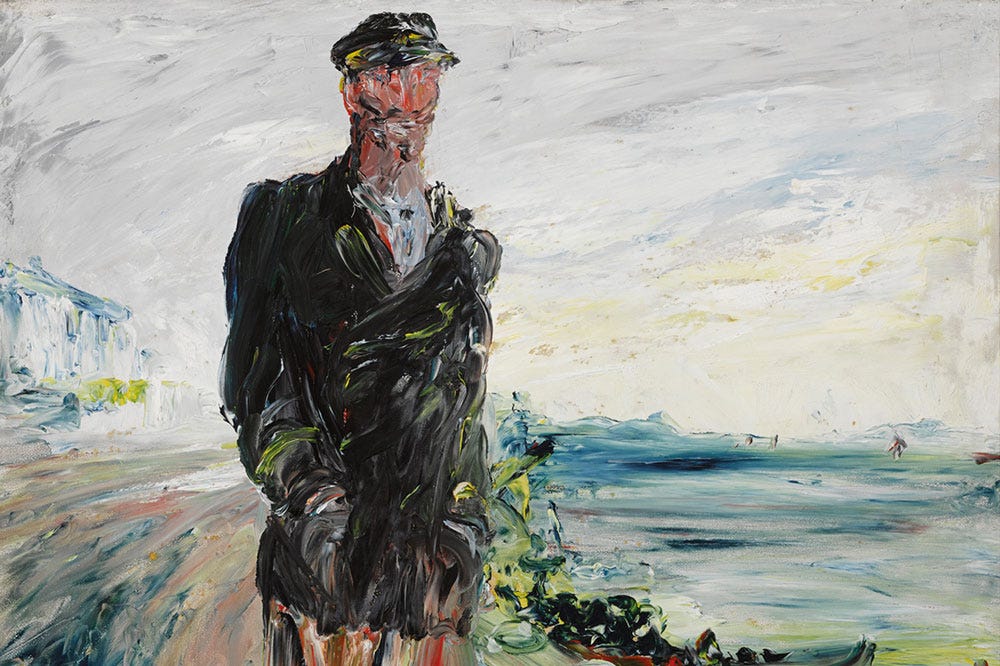
I Have Longed To Move Away by Dylan Thomas
I have longed to move away
From the hissing of the spent lie
And the old terrors’ continual cry
Growing more terrible as the day
Goes over the hill into the deep sea;
I have longed to move away
From the repetition of salutes,
From there are ghosts in the air
And ghostly echoes on paper,
And the thunder of calls and notes.I have longed to move away but am afraid;
Some life, yet unspent, might explode
Out of the old lie burning on the ground,
And, crackling into the air, leave me half-blind.
Neither by night’s ancient fear,
The parting of hat from hair,
Pursed lips at the receiver,
Shall I fall to death’s feather.
By these I would not care to die,
Half convention and half lie.
For many years, my idea of success was strongly linked to leaving my hometown, moving to another country (preferably in Europe) and never coming back. Perhaps it still is, but with reservations, especially given the anti-immigration climate that is plaguing the entire world. But even with that in mind, going to a faraway place where I would heroically flourish as an artist is a youthful ideal that is difficult to abandon. After all, there are several manifestations in culture where this romantic character – the artist in exile – can be found and transformed into a kind of salvation in the minds of the misunderstood who cannot find an opportunity to exercise their supposed genius. Although I am aware that reality isn’t quite like that, I still wonder if I shouldn’t be planning my escape.
I would say that Hemingway is the main culprit for this fantasy due to his iconic A Moveable Feast, a depiction of a chimerical Paris in the 1920s, an artist’s refuge where one could be poor with dignity and have unrestricted access to culture, good wine, interesting company, and Picasso was always just a bar away. Or at least that’s how he reported it. Other authors, such as Truman Capote, are not so impressed with this choice of lifestyle:
“Among the planet’s most pathetic tribes, sadder than a huddle of homeless Eskimos starving through a winter night seven months long, are those Americans who elect, out of vanity, or for supposedly aesthetic reasons, or because of sexual or financial problems, to make a career of expatriation…” (Answered Prayers, p. 72)
There is a certain moral superiority in abandoning one’s place of origin and enduring discomfort in pursuit of a career that depends heavily on luck. There is, in equal measure, folly and valour in being this kind of non-conformist, in not following the safe path and giving up everything familiar for a bet on one’s own talent. But what if you despise everything familiar? Then that choice isn’t so difficult. This is the case of Stephen Dedalus, James Joyce’s semi-autobiographical character in A Portrait of the Artist as a Young Man, and the most interesting example of the “artist who leaves” that I have ever encountered in fiction.
Although I’m usually against biographical readings of fictional works, we cannot ignore the strong (and intentional) similarities between author and protagonist here. Born in Dublin in 1882, Joyce’s youth was marked by political turmoil, especially after the death of nationalist leader Parnell in 1892; it’s an important fact discussed at Stephen’s dinner table in the first chapter. In his youth, Joyce suffered the increasing poverty of his family, a traumatic event that also found its way into the novel. Such conditions – among many others – further intensified Joyce’s unrest, and like many artists of the time, he eventually moved to Paris1 – Hemingway even mentions meeting him in A Moveable Feast – and his absence from Ireland became a permanent exile, which seemed like the only pathway towards true artistic freedom.
But is geographical change the primary step towards personal and artistic fulfilment? Why does this idea of the artist at odds with his origins – an outsider from birth – remain in the collective imagination as the image of the “true” artist? It seems that the artist who loves and speaks of his own land is almost gauche (especially in an age of dangerous chauvinism). But there are good examples to the contrary: The poet W.B. Yeats managed to become a fully-fledged and brilliant poet while remaining in Dublin and staying close to his Irish roots, so why couldn’t Joyce (and by extension Stephen) do the same?
David Daiches2 explains that Stephen’s story of rejection of his environment is simultaneously the story of his emergence as an artist: the book closes with Stephen’s development of an aesthetic philosophy and a decision to leave Ireland.
Early on in the novel, we learn that Stephen maintains a certain estrangement from his fellow Irishmen. His very surname, Dedalus, is distinctly non-Irish. As Hugh Kenner3 puts it: “Why, a name like a huge smudged fingerprint: the most implausible name that could conceivably be devised for an inhabitant of lower-class Catholic Dublin: a name that no accident of immigration, no freak of etymology, no canon of naturalism however stretched, can justify: the name of Stephen Dedalus.”
There is a beautiful passage that takes place halfway through the novel, during Stephen’s adolescence, in which he has a sort of revelation regarding his own name:
“Now, as never before, his strange name sounded to him a prophecy. So timeless seemed the grey warm air, so fluid and impersonal his own mood, that all ages were as one to him. A moment before the ghost of the ancient kingdom of the Danes had looked forth through the vesture of the hazewrapped city. Now, at the name of the fabulous artificer, he seemed to hear the noise of dim waves and to see a winged form flying above the waves and slowly climbing the air. What did it mean? Was it a quaint device opening a page of some medieval book of prophecies and symbols, a hawklike man flying sunward above the sea, a prophecy of the end he had been born to serve and had been following through the mists of childhood and boyhood, a symbol of the artist forging anew his workshop out of the sluggish matter of the earth a new soaring and imperishable being?” (p. 142)
This is one of the most acute examples of Stephen’s self-absorption and one that significantly introduces the possibility of irony into the narrative – is Joyce mocking Stephen’s delusions of grandeur? At this point, the reader is well aware of Stephen’s youthful arrogance, and the flowery language of this passage – however beautiful – expresses a certain kind of exaggeration that makes its subject sound quite pathetic. The question of irony in this novel is much debated, and although it is quite interesting, I do not think it is pertinent to include in this essay.
In any case, the “name-prophecy” episode is a crucial moment in the narrative – a turning point when Stephen decisively begins his journey toward Art, when he turns away from “the inhuman voice that had called him to the pale service of the altar” (p. 143) and declines the invitation to join the Jesuits. By contrast, the art world would be essentially humane and colourful – a vibrant existence waiting for him in foreign lands. Still, we cannot forget that those are the insights of a very young person: there is a pervasive tendency to idealise and romanticise, as well as a lack of nuance and flexibility in his opinions.
I recognise in Stephen’s language my own youthful disposition of thinking about everything in absolutes: every decision is final, every belief is inflexible, every opinion once uttered is set in stone forever. I have to forcibly remind myself that life is more forgiving than that, and things can change at any age. The reader won’t know if Stephen will learn such grace, since he is tied to a narrative that ends at the height of his convictions and in an exultation towards the unknown.
As a young schoolboy, Stephen is passionate and curious but cannot express himself that well due to his bashfulness. Language has a piquancy for him: he muses over words and their sound and meanings, but finds his interest in them to be a solitary occupation. Thus, he worries about the intellectual barrenness that surrounds him and compares it to the outer world:
“but yet it wounded him to think that he would never be but a shy guest at the feast of the world’s culture and that the monkish learning, in terms of which he was striving to forge out an esthetic philosophy, was held no higher by the age he lived in than the subtle and curious jargons of heraldry and falconry” (p. 147)
Not only is Stephen anxious about the infinite accumulation of human knowledge, but also about the fact that his own offerings to the “feast of world culture” will be considered incomprehensible or irrelevant by his people. The possibility that his interests are nothing more to the world than a niche quirk, like heraldry and falconry, is certainly mortifying.
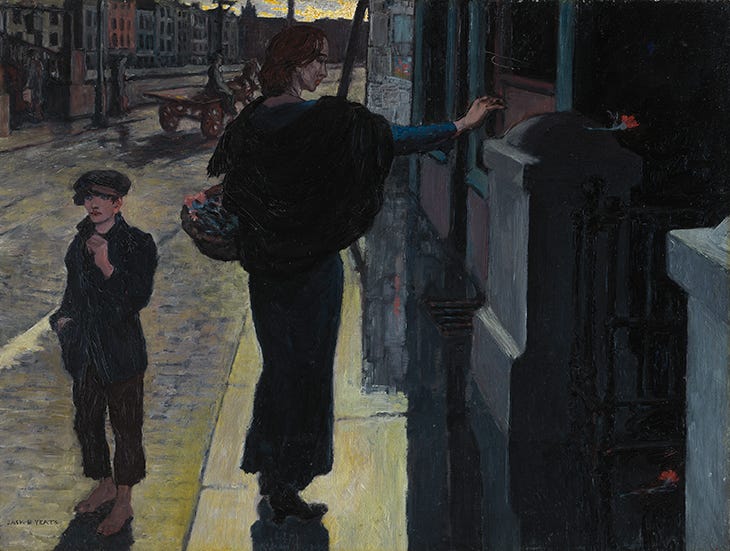
At the very end of the book, the narrative switches from third person to diary form. In this diary, Stephen wrote as his penultimate entry:
“26 April: Mother is putting my new secondhand clothes in order. She prays now, she says, that I may learn in my own life and away from home and friends what the heart is and what it feels. Amen. So be it. Welcome, O life! I go to encounter for the millionth time the reality of experience and to forge in the smithy of my soul the uncreated conscience of my race.” ( p. 213)
It’s worth noting that the novel opens with an epitaph taken from Daedalus’ section of Ovid’s The Metamorphoses, which translated means: “He turned his mind toward unknown arts”. Similar to Daedalus, who used his ingenuity to create extraordinary artefacts, such as a pair of wax wings to escape King Minos’ prison, Stephen uses his ingenuity to invent art in a “new language” as well as a new identity, detached from his Irish heritage. This is likely what he had in mind when declaring that he wished to “forge in the smithy of my soul the uncreated conscience of my race”.
Throughout his life, Stephen constantly struggles with his country, whether politically, linguistically, religiously or culturally. He waved between moments of conformity and rebellion and had to contend with feeling alienated. Stephen’s specific kind of alienation can be understood through the words of William H. Gass4, who defined it as “the exile of emotions – of hope, of trust – sent away somewhere so they won’t betray us”. The tension between self-identity and national identity, between interior and exterior, is the decisive feature of the artist’s journey toward exile.
The parallel between Stephen and the classical myth guides our interpretation of his destiny. While Joyce compares Stephen to the great artificer who gave wings to man, the author also keeps in the reader’s mind the downfall of Icarus, caused by the combination of Daedalus’s artifice and his son’s ambition. We are compelled to consider the possibility – symbolically implied through mythology and tradition, in the usual modernist fashion – that this will be Stephen’s outcome in life, as he is a combination of the two figures:
“The snares of the world were its ways of sin. He would fall. He had not yet fallen but he would fall silently, in an instant. Not to fall was too hard: and he felt the silent lapse of his soul, as it would be at some instant to come, falling, falling but not yet fallen, still unfallen but about to fall. (p. 147)”
This is an interesting passage. Joyce deliberately frames one of Stephen’s epiphanies as an image of a fallen destiny, one that recalls Icarus’ fatal descent. Stephen constantly appears as a modern Icarus through many “flying” symbols and metaphors, emphasising his attempt to fly past the labyrinth of his Irish background propelled by his rebellious cosmopolitanism. In the last chapter, this flight takes shape as he dismisses the claims of nation, family, and church, asserting his independence in a series of conversations that culminate in his imagined escape through art. Criticised for lacking patriotism and piety by his fellow Irishmen, Stephen replies in a way that seals both his isolation and his arrogant self-conception as an artist who is above his situation:
“The soul is born first in those moments I told you of. It has a slow and dark birth, more mysterious than the birth of the body. When the soul of a man is born in this country there are nets flung at it to hold it back from flight. You talk to me of nationality, language, religion. I shall try to fly by those nets” (p. 171)
Try as one might, one cannot fully escape oneself – nationality is an indelible part of the Self, and denying those parts can contribute to one’s psychological turmoil, as we constantly see Stephen confused and anxious.
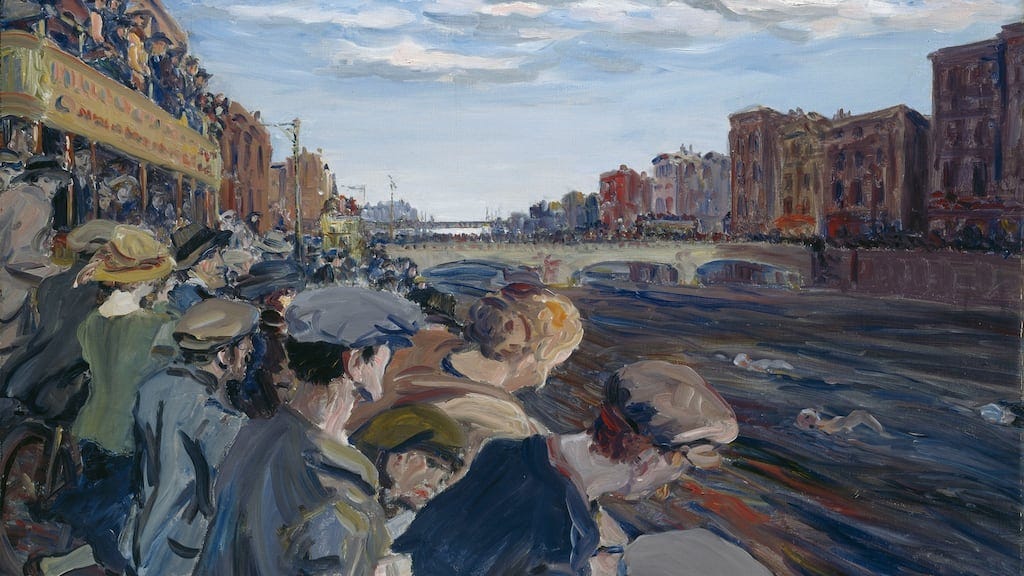
Stephen’s looming downfall is also echoed in the very structure of the book: each of the five chapters begins with him at his lowest point and concludes in an exultation or epiphany. It is precisely from this recurring narrative pattern that Wayne Booth, in The Rhetoric of Fiction, raises the following questions: Is the final exaltation a release from the depressing features of Irish life which have tainted the earlier experiences? Or is it the fifth turn in an endless cycle?
I believe it is less a release than a return. Stephen’s highs and lows may shift in substance, but never in pattern, for life itself appears to him in this form – as a cycle, or even as an “eternal return”. The narrative does not end with liberation, but rather with the suggestion of a future repetition. In this sense, Stephen’s dreams of triumph in exile will not be fulfilled. If the novel continued with him finally out of Ireland, we would probably find him dejected again, only in a new setting. Such a movement stems from Joyce’s own fascination with circular structures. One need only remember the infamous design of Finnegans Wake, with its connected opening and closing lines, trapping both readers and characters in a rhythm of perpetual recurrence. Framed in these terms, we may conclude that Stephen’s ongoing drama of place and displacement will not be resolved.
Beyond the question of physical belonging, his anxieties are also rooted in matters of cultural capital. As a poor country under colonial rule and far removed from its own traditions, Ireland at that time did not offer an environment conducive to Stephen’s intellectual ambitions. For instance, at school and university, Stephen’s experience was always one of “aloof superiority”, given the provincialism he saw in his classmates and teachers.
The ability to produce, decipher, and appreciate complex texts signals a higher ranking on the cultural capital scale, but advancement through these means only occurs in a society where such skills are valued. In Stephen’s case, the search for exile is also a search for recognition of his merits, which would supposedly yield social prestige in a more erudite and cosmopolitan environment that was also less prosaic, religiously conservative, and above all: a place where his art could be freely useless and still be important.
In the final chapter, Stephen offers an aesthetic theory that mixes Aquinas’, Plato’s and Aristotle’s philosophy with the concept of “art for art’s sake”, promoted by the decadent movement of Wilde, Pater, and the French Symbolists. He defines art as “the human disposition of sensible or intelligible matter for an aesthetic end”. The purpose of art, therefore, is not to be “useful” in a utilitarian sense; it’s neither moral nor educational, but justified solely as an end in itself – the aesthetic end. Yet such beliefs never quite found secure ground in Stephen’s own time, let alone in ours, when the arts and humanities in general are constantly under attack for not conforming to the values of neoliberalism’s “productivity”.
This is another aspect of the novel with which I can relate. Much of the exile fantasy is motivated by feelings of social and cultural devaluation. The chimerical Paris of Hemingway, where one can create freely and thrive, is what Stephen and I dream about. After all, the books that succeed in real life are always those written by others, and others are always less brilliant than we are. Snobbery is an essential component of the artist in exile’s character – so much so that he seeks an intellectual Arcadia away from the philistines, where he can escape to and finally be understood and appreciated.
Ironies aside, my artistic passions are not really very relevant in Brazil, as I’m mainly interested in classic English literature (particularly Shakespeare). Even the format in which I work most – namely, the essay – isn’t very popular here compared to the essayistic tradition of other countries. It makes sense that I want to go abroad (even if only temporarily) to study in the place where the literature I love was produced and where it is naturally more valued. Not only do I appreciate English literature as an object, but much of the inspiration for my narrative creation comes from anglophone authors, such as Joyce himself, Hemingway, Wilde, Austen, etc. I don’t know where Stephen went, but if I continue to draw a parallel between him and his creator, it is possible that he went to Paris like Joyce did, perhaps to seek out a Mercedes, whom he dreamed of as a teenager when he first read Dumas.
I still have a complicated relationship with my country, but I am happy to announce that it has been improving every year, especially when I compare Brazil to foreign countries that claim to be so civilised. I am older than Stephen was when he decided to leave Ireland, and I think part of the maturity that comes with adulthood is consolidating your sense of self and reconciling with your origins. Well, to deal with an unsatisfactory reality, the best remedy remains art – and that is something Stephen discovered early on.
In his article, Daiches argues that, “It is the aim of the artist who, upset by the confusion and disintegration of values in the world in which he grows up, feels compelled to escape from that world, within which his function as an artist is not clear, and to evolve a view of art which makes that escape into a virtue”. Stephen longs to create a world of his own, where he can exercise his creative order by guiding this world towards Beauty (“the object of the artist is the creation of the beautiful”). He aims to assume the role of the artist-god by creating an aesthetic theory to interpret the world and thus remake it through imagination. The discovery of this power is made in the last chapter, along with his decision to go into exile.
“The personality of the artist, at first a cry or a cadence or a mood and then a fluid and lambent narrative, finally refines itself out of existence, impersonalisses itself, so to speak… The artist, like the God of creation remains within or behind or beyond or above his handiwork, invisible, refined out of existence, indifferent, paring his fingernails” (p. 181)
In other words, Stephen realises that, as an artist, he has the ability to reinvent reality through language, and that this very ability may allow him to elude the persistent feeling of alienation. Such is the point of view of Henry Miller in The Wisdom of the Heart:
“Escape is the deepest wish… This the artist has always manifested through his creations. By living into his art he is all-powerful, a world which he dominates and rules. This intermediary realm of art, this world in which he moves as hero, was made realizable only out of the deepest sense of frustration. It arises paradoxically out of a lack of power, out of a sense of inability to thwart fate.”
I do not believe that art is (or should be) a substitute for reality, but it certainly has the capacity to expand and enrich what already exists in such absolute terms. It is precisely because reality is so inescapable that the romantic mind craves escape above all else – such forces are directly proportional. Since that desire can never be fully satisfied, the artist redirects this energy into what Miller calls the “intermediary realm of art”: a liminal space that is neither entirely real nor entirely unreal, yet undeniably experienced. He goes on to observe that:
“The artist’s dream of the impossible, the miraculous, is simply resultant of his inability to adapt himself to a reality. He creates, therefore, a reality of his own – in the poem – a reality which is suitable to him, a reality in which he can live out his unconscious desires, wishes, dreams.”
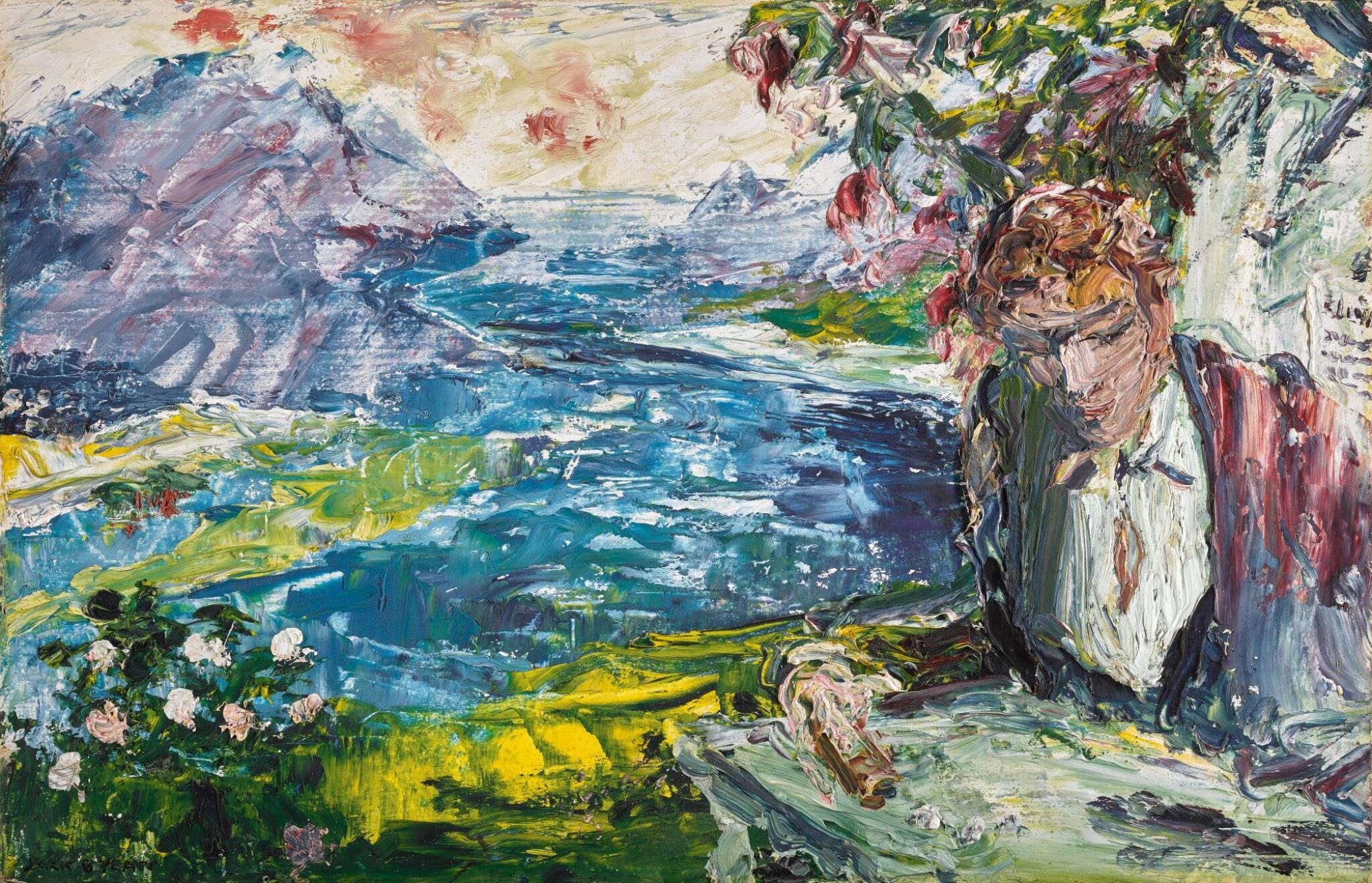
It is one thing to refuse to adapt to reality out of arrogance, naivety, or spite, and quite another to recognise the world’s shortcomings and consciously refuse to accept them. Although understandable – and even endearing – Stephen’s particular inability to adapt to reality testifies to his immaturity. Portrait is, after all, the story of an artist in formation, attempting to make sense of the world and of himself through his chosen framework – in this case, language – hence his need to construct an aesthetic theory, however imperfect or impractical it may be. Joyce deliberately restricts Stephen’s grasp of art just as he restricts his grasp of life; what Stephen does not see about the one is what he does not know about the other. Many scholars tried to “polish” and “reinterpret” Stephen’s theory, but to correct the inconsistencies is to miss its most vital function: the faults of Stephen’s aesthetics expose the limitations of his still “uncreated soul”.
By overlooking the very context that shapes human experience – his own above all – in which art is both created and apprehended, Stephen is dangerously closer to isolation rather than exile. He himself admits that:
“To merge his life in the common tide of other lives was harder for him than any fasting or prayer and it was his constant failure to do this to his own satisfaction which caused in his soul at last a sensation of spiritual dryness together with a growth of doubts and scruples.” (p. 128)
Art severed from experience, from life itself, is barren. Just as his aesthetic theory reveals his precocity and immaturity, so does his conscious reluctance to merge with the “common tide of other lives”, an approach that would animate true creation. Stephen’s detachment from his society and its values, though self-aware, is not yet self-critical. His romanticised idea of exile as the solution to everything proves to be mistaken. In short, Stephen’s theory of aesthetics is meant to grow and change as Stephen (hopefully) grows and changes.
For artists who create out of a sense of impotence and inadequacy, the desired escape may even be to a place that offers better social and financial conditions to welcome them as such, but the confinement they feel and that reflects in their work is, at its core, existential.
In a way, Stephen already feels exiled while still living in his country – he naively believes he can escape this feeling by escaping the place. His discontent reaches beyond the Irish context, touching the very metaphysical problems of human limitation: our inherently flawed human feelings and faculties through which we attempt to extract sublime beauty from imperfect reality. He partly acknowledges this in the following passage:
“To speak of these things and to try to understand their nature and, having understood it, to try to slowly and humbly and constantly to express, to press out again, from the gross earth or what it brings forth, from sound and shape and colour which are the prison gates of our soul, an image of the beauty we have come to understand – that is art.” (p. 173)
Ultimately, Stephen’s failure to realise the true essence of his displacement is evidence of his incompleteness as an artist and individual. The Portrait does not end with his final image; it leaves Stephen suspended in arrested development, his ambitions outpacing his growth.
As we have seen, art can be its own form of exile, but for this function to be properly fulfilled, the artist must be attentive and highly aware of the scopes of reality, of themselves, and of their creation. Stephen has not yet attained such mastery, though the novel leaves open the possibility that he might.
Thus, to become a mature artist – even a fallen one – would require him to recognise his unavoidable indebtedness to the very tradition he strives to renounce. Far from escaping nationality, language, religion, Stephen will carry them everywhere with him. Arguably, this is what happened to Joyce, as he abandoned Ireland only to spend the rest of his life writing about it.
If I were to imagine the events in Stephen’s life after the conclusion of this book, I would say that his next epiphany would be a discovery about the “futility” of his exile, for that was not the kind of exile he sought. It is likely that his mother’s prayers will be answered and he will discover “what the heart is and what it feels”, but the answer will be different from what he anticipated. The “reality of experience” that Stephen will encounter will necessarily include his pre-exile experience, no matter how much he struggles against it. The mature artist, in turn, knows how to incorporate and accept this reality in his work, for no matter where one goes, it is impossible to escape oneself.
I can picture him through Eliot’s verses in Ash Wednesday, “Because these wings are no longer wings to fly, but merely vans to beat the air”, having fallen while trying to “fly by those nets”. From his predestined fall, Stephen will once again return to the cycle, but this time, a little more capable of making proper use of his abilities, as the “great artificier” that he was bound to be.
Joyce and his wife Nora first moved to Zurich in 1904, followed by Trieste, Rome, Trieste again, Zurich again, and finally Paris.
Daiches, David. “James Joyce: The Artist as Exile.” College English 2, no. 3 (1940): 197–206. https://doi.org/10.2307/370369
Kenner, Hugh. “Joyce’s Portrait–A Reconsideration.” A Portrait of the Artist as a Young Man. Ed. John Paul Riquelme. New York: W. W. Norton & Company, Inc. 2007)
GASS, WILLIAM H. “Exile.” Salmagundi, no. 88/89 (1990): 89–108. http://www.jstor.org/stable/40548467.